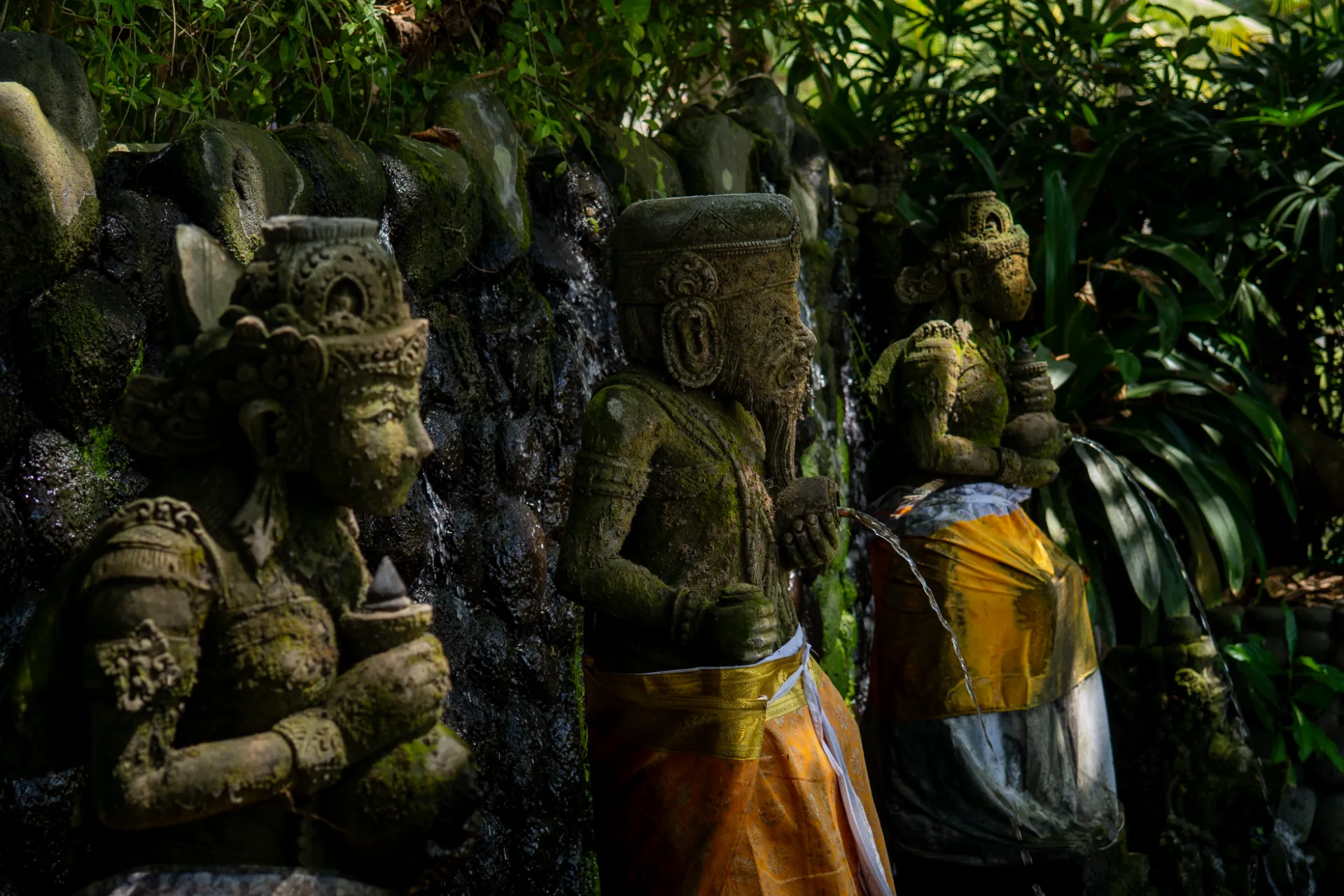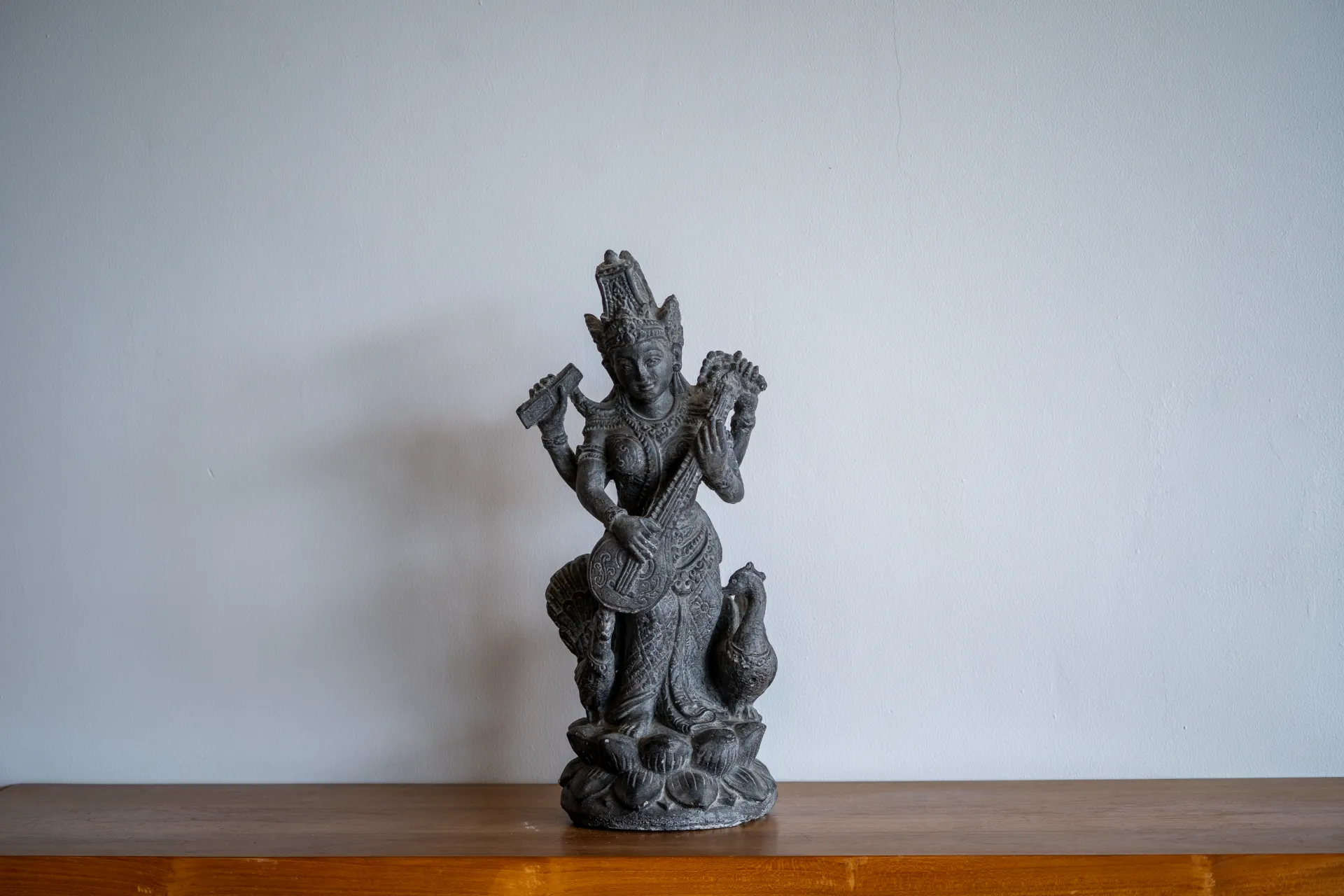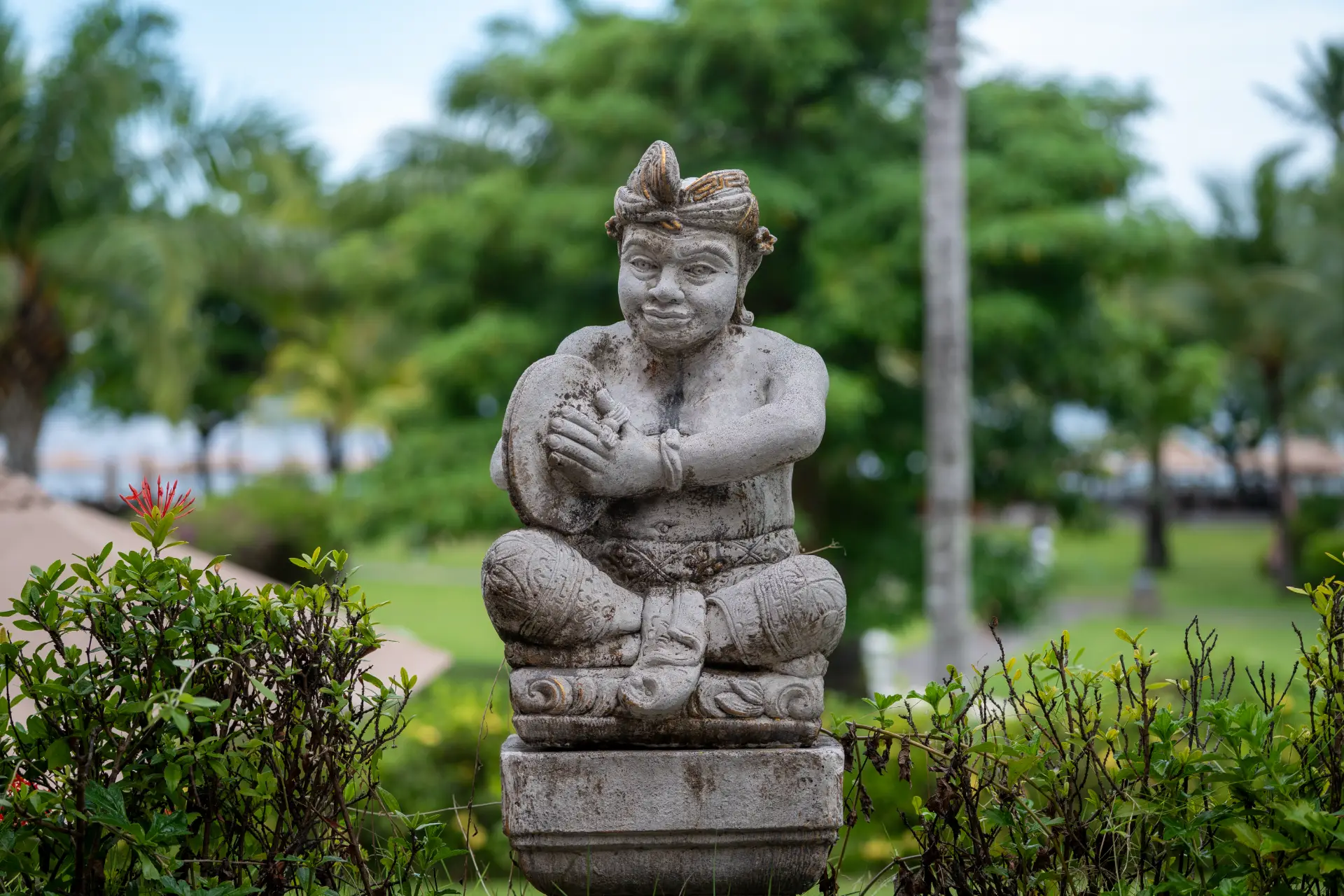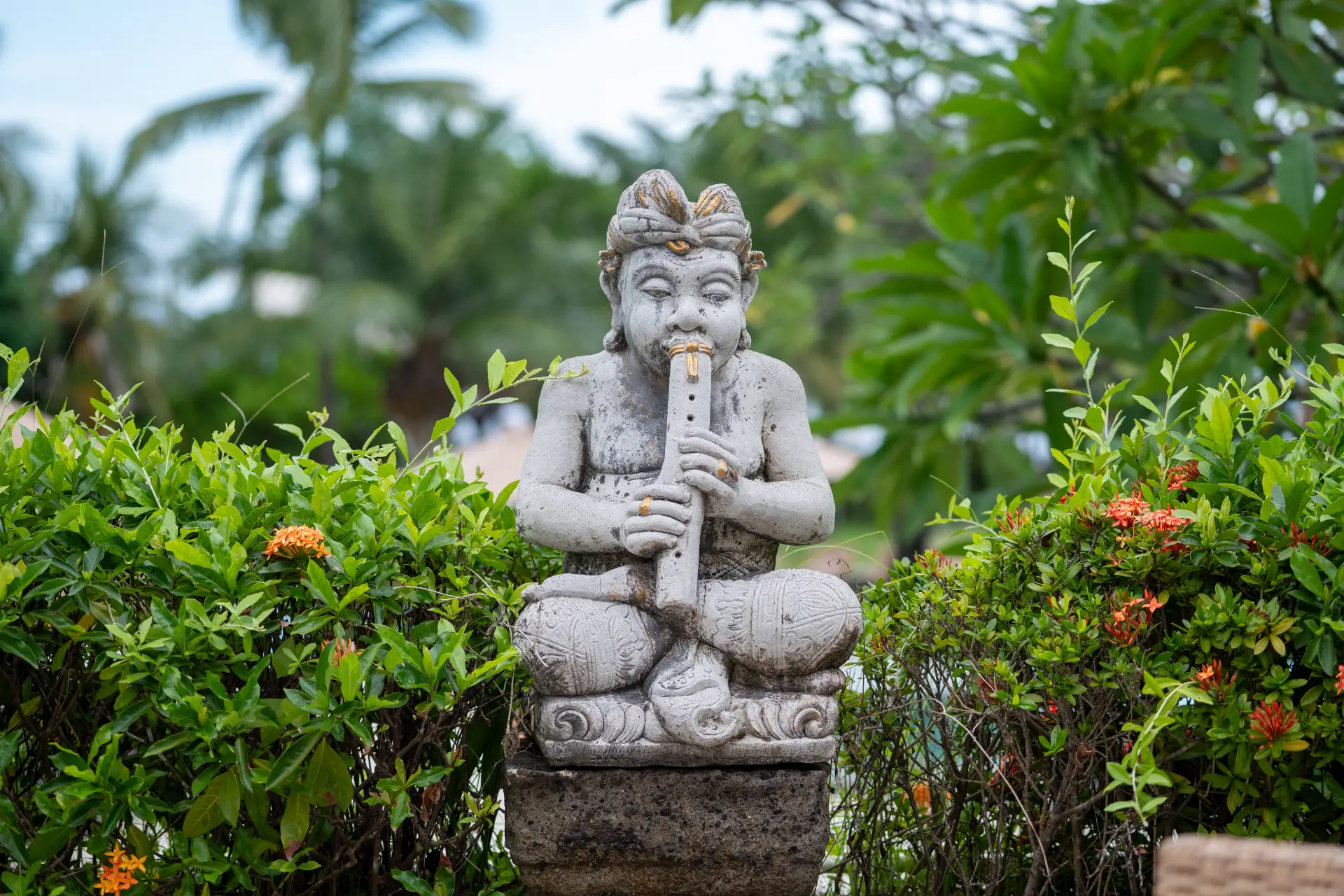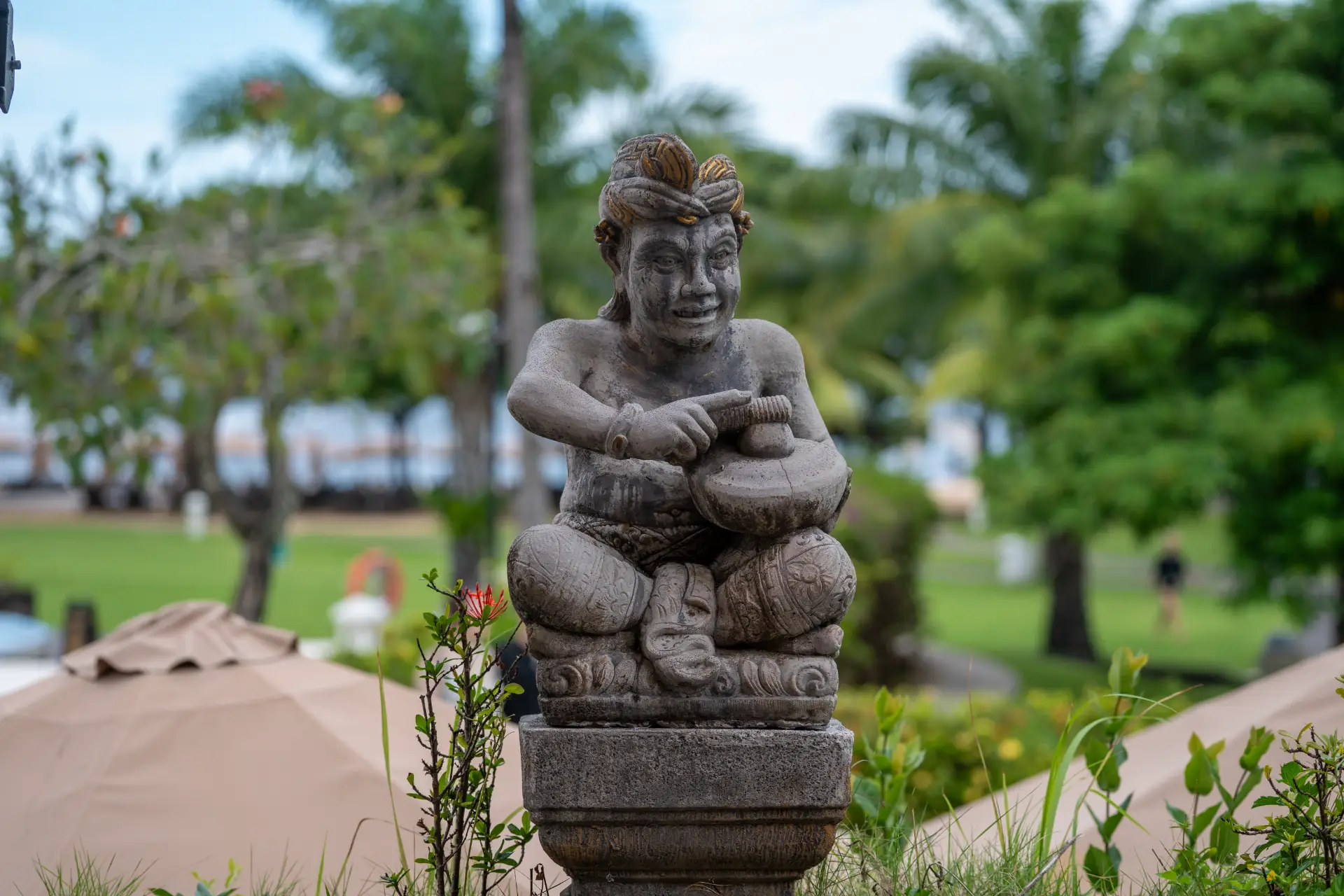
Balinese human-form sculpture playing a gamelan instrument called kendang.
The kendang is a traditional Balinese percussion instrument made from solid wood and animal skin, which produces a distinctive sound when struck. There are two types of kendang: kendang lanang and kendang wadon. Lanang symbolizes masculinity (purusa/male), while wadon symbolizes femininity (pradana/female).
In Balinese karawitan tradition, the kendang has a very rich variety. Based on organological studies (the structure of musical instruments) by Balinese music experts (karawitan lecturer at ISI Bali, Dr. I Gde Made Indra Sadguna), there are nine main types of Balinese kendang. Philosophically, almost all of these kendang types are played in pairs based on the concept of rwa bhineda (two different but complementary elements), namely kendang wadon (female/larger size, lower pitch) and kendang lanang (male/smaller size, higher pitch). The types of Balinese kendang, listed from the largest to the smallest, are as follows:
- Kendang Mebarung: its characteristic is that it is the largest type of kendang in Bali, with a length reaching 1.8 to 2 meters. It is only found in Jembrana Regency and is used specifically to accompany the Angklung Mebarung gamelan (tuned in a 4-tone slendro scale) or the traditional buffalo racing competition (makepung).
- Kendang Tambur: its characteristic is that it is very large in size (about 72 cm in length with a wide diameter), but still smaller than the mebarung type. As one of the distinctive kendang types from Karangasem Regency, it is played together with Gong and Gong Beri instruments for Dewa Yadnya (religious ceremonies), or historically it was used to accompany royal soldiers when going to war.
- Kendang Bedug (Bebedug): its characteristic is similar in shape to the Kendang Tambur, but slightly smaller in size. The Kendang Bedug is very rare and is generally part of the Gong Beri gamelan ensemble (a sacred gamelan without metal keys), used to accompany sacred dances such as Baris Cina in the Renon and Sanur areas of Denpasar.
- Kendang Cedugan (Pepanggulan): its characteristic is a large-sized drum played using a combination of one bare hand and one beater (a wooden stick). It is very popular because it is used in Gong Kebyar, Gong Gede, and Baleganjur ensembles to produce strong rhythmic patterns (gegilak or lelambatan).
- Kendang Gupekan: its physical size is similar to the Kendang Cedugan, but it is played purely using bare hands (without any stick). The term gupekan comes from the sound of hand slapping. It is used in Gong Kebyar gamelan to accompany modern dances and instrumental compositions, where the kendang is required to perform very fast and dynamic interlocking rhythms (kotekan/ubit-ubitan)
- Bebarongan: its characteristic is a medium or ‘intermediate’ size (approximately 62–65 cm in length). It is specially crafted with its own distinctive sound character to accompany the Bebarongan gamelan ensemble (used to accompany Barong and Rangda dances).
- Kendang Krumpungan: its characteristic is a smaller and slimmer size. It is played in pairs (lanang–wadon) purely using bare hands. It is named krumpungan from the onomatopoeic sound it produces, which typically sounds like “pung”. It is a key component in classical and elegant gamelan ensembles such as Gamelan Pegambuhan and Gamelan Palegongan.
- Kendang Batel: its characteristic is that its physical form and playing technique are very similar to the Kendang Krumpungan, but its size is slightly smaller. It is usually used to accompany classical dance-drama performances such as Gamelan Pengarjan or Batel Wayang Ramayana/Mahabharata.
- Kendang Angklung: its characteristic is that it is the smallest type of kendang in Bali (measuring only about 25–27 cm in length). Due to its small size, this drum is played using a small special beater. It is used as the main rhythm controller in the Balinese Angklung Gamelan ensemble (which is generally used for Pitra Yadnya ceremonies such as death rituals, cremation, or funeral rites).