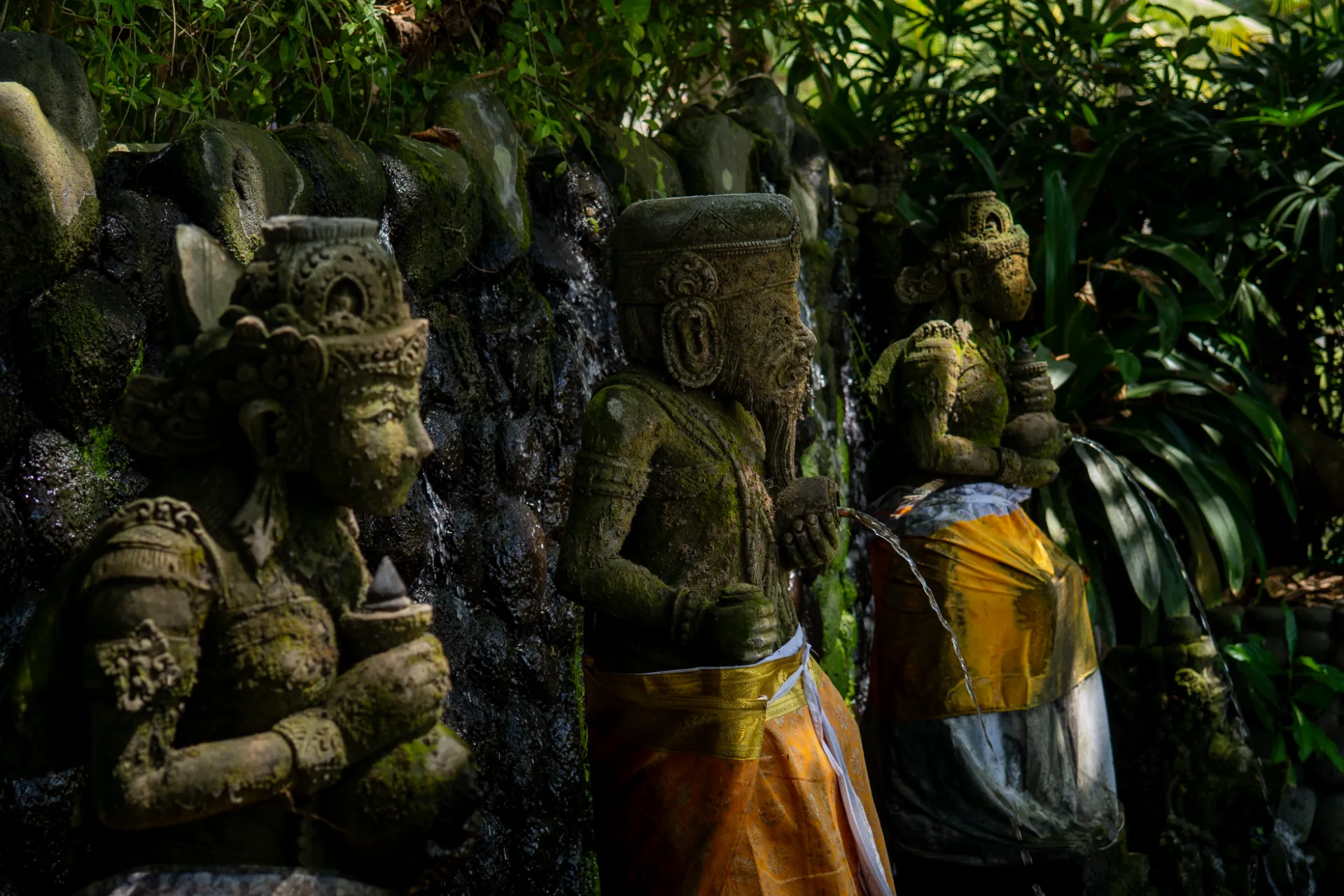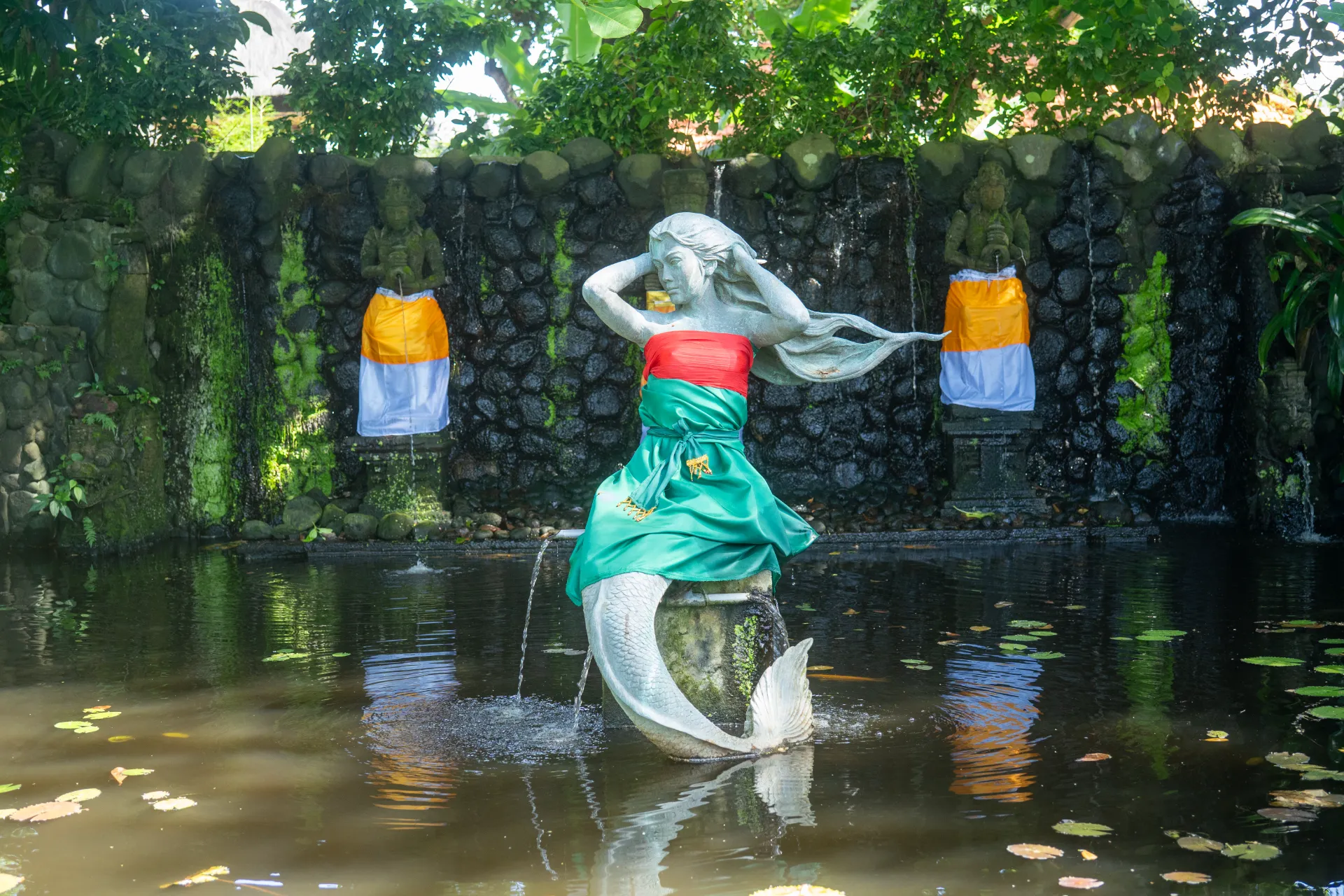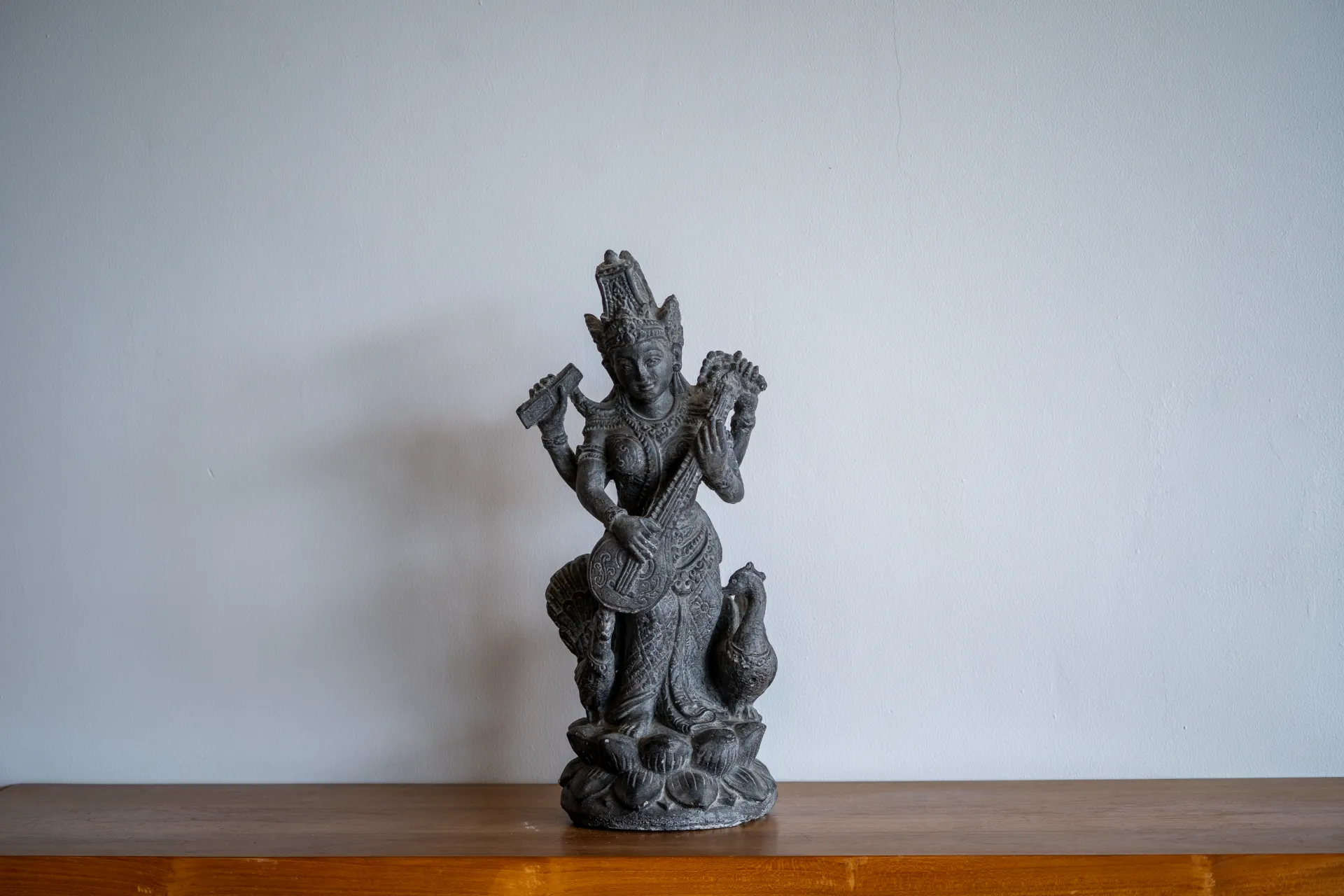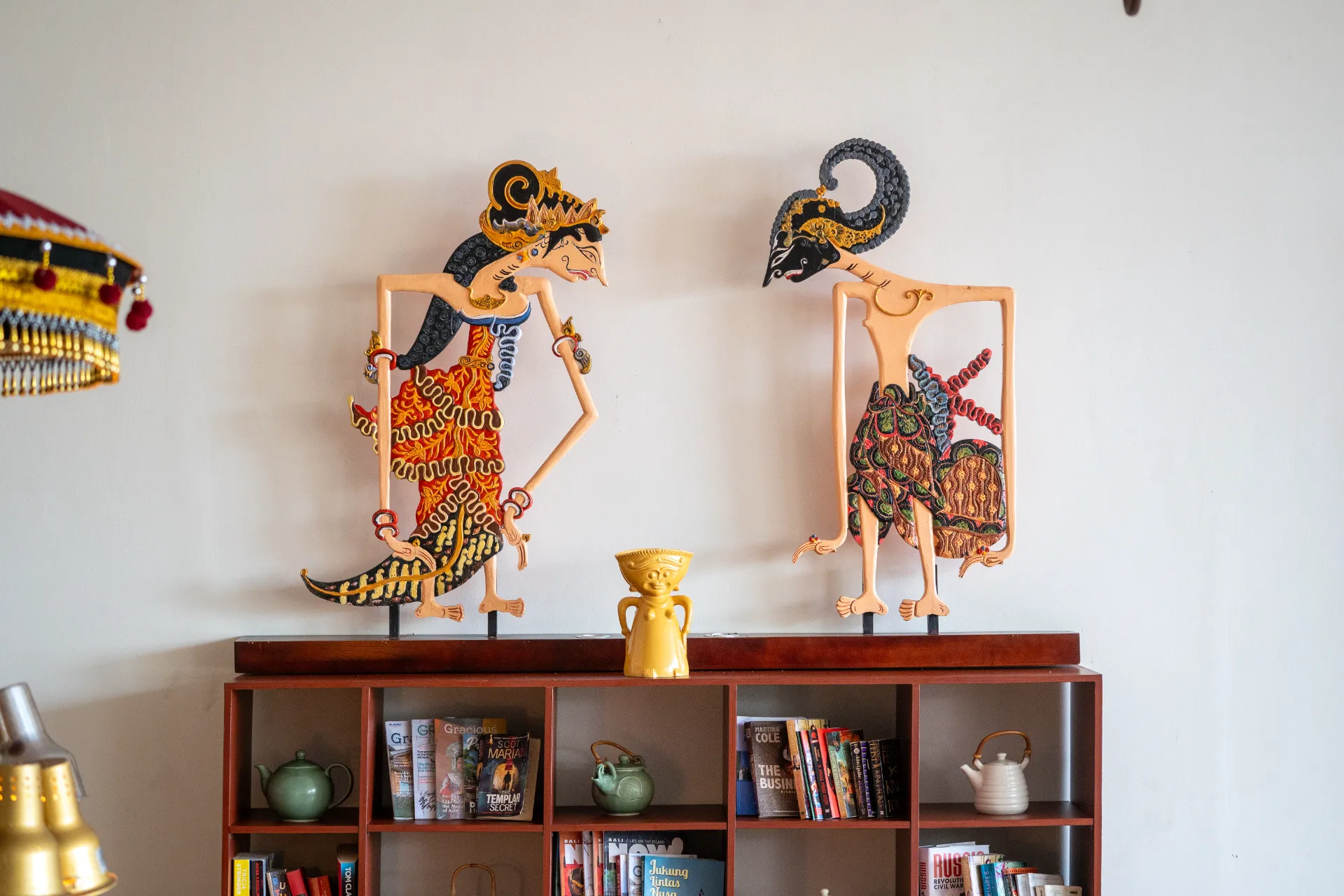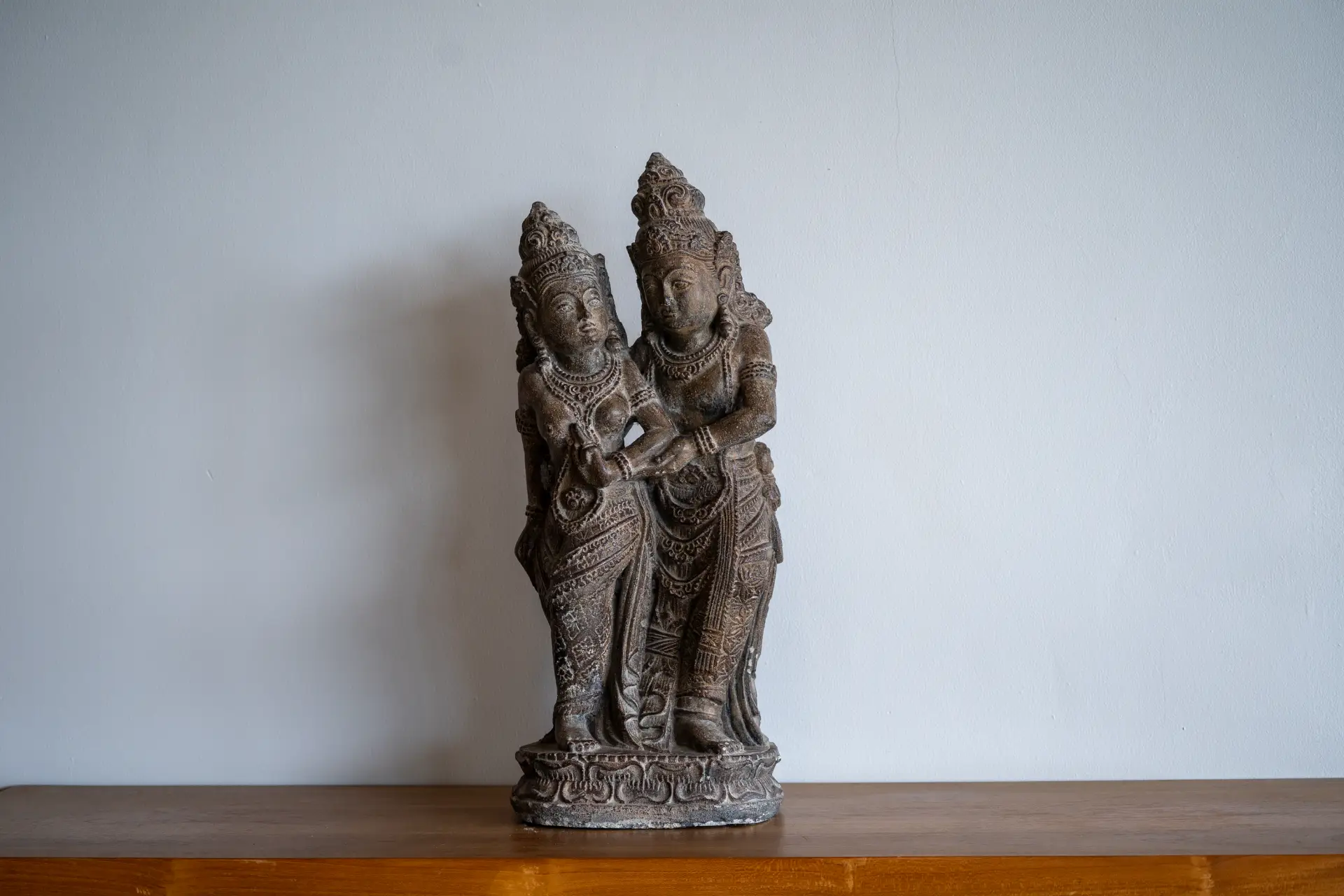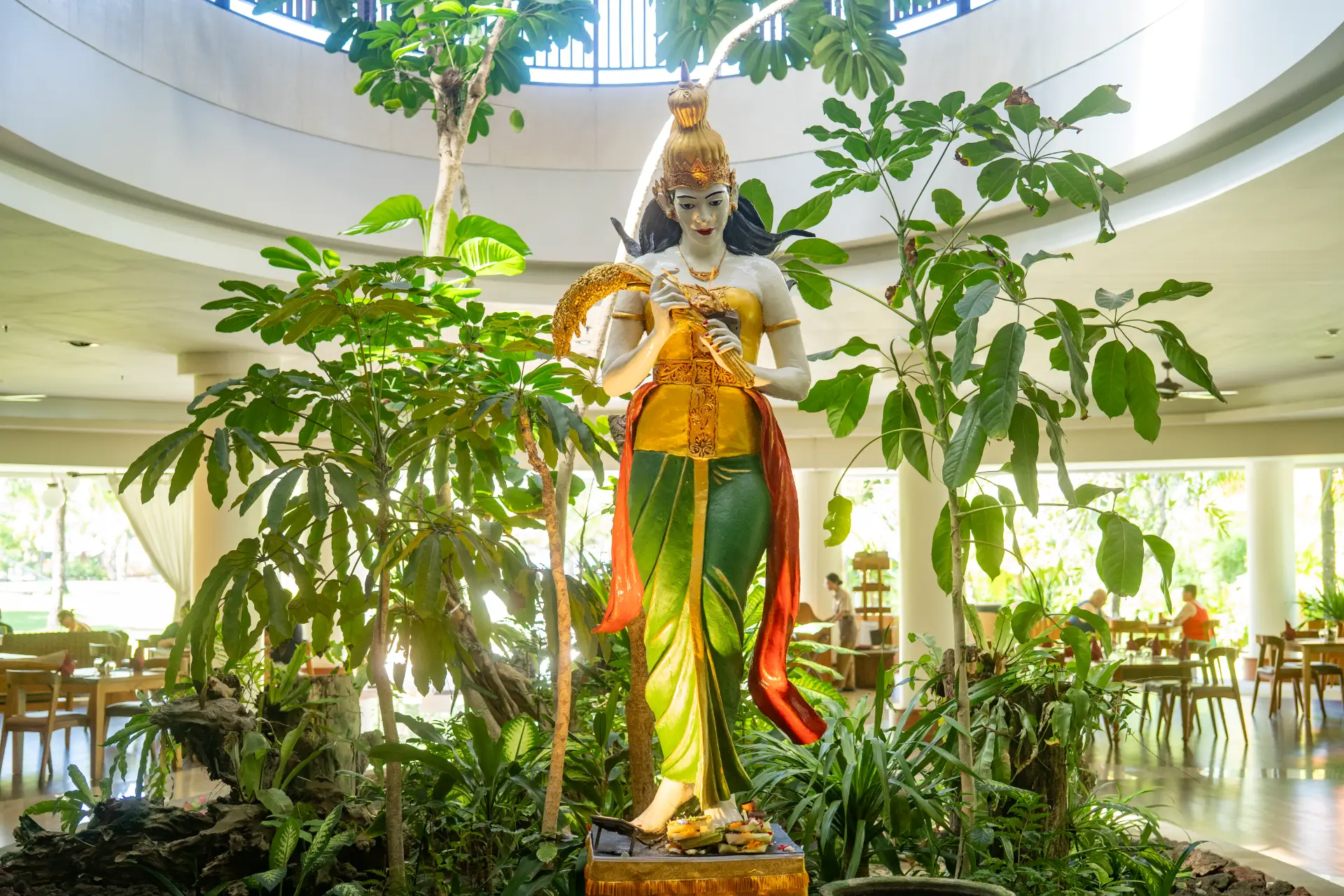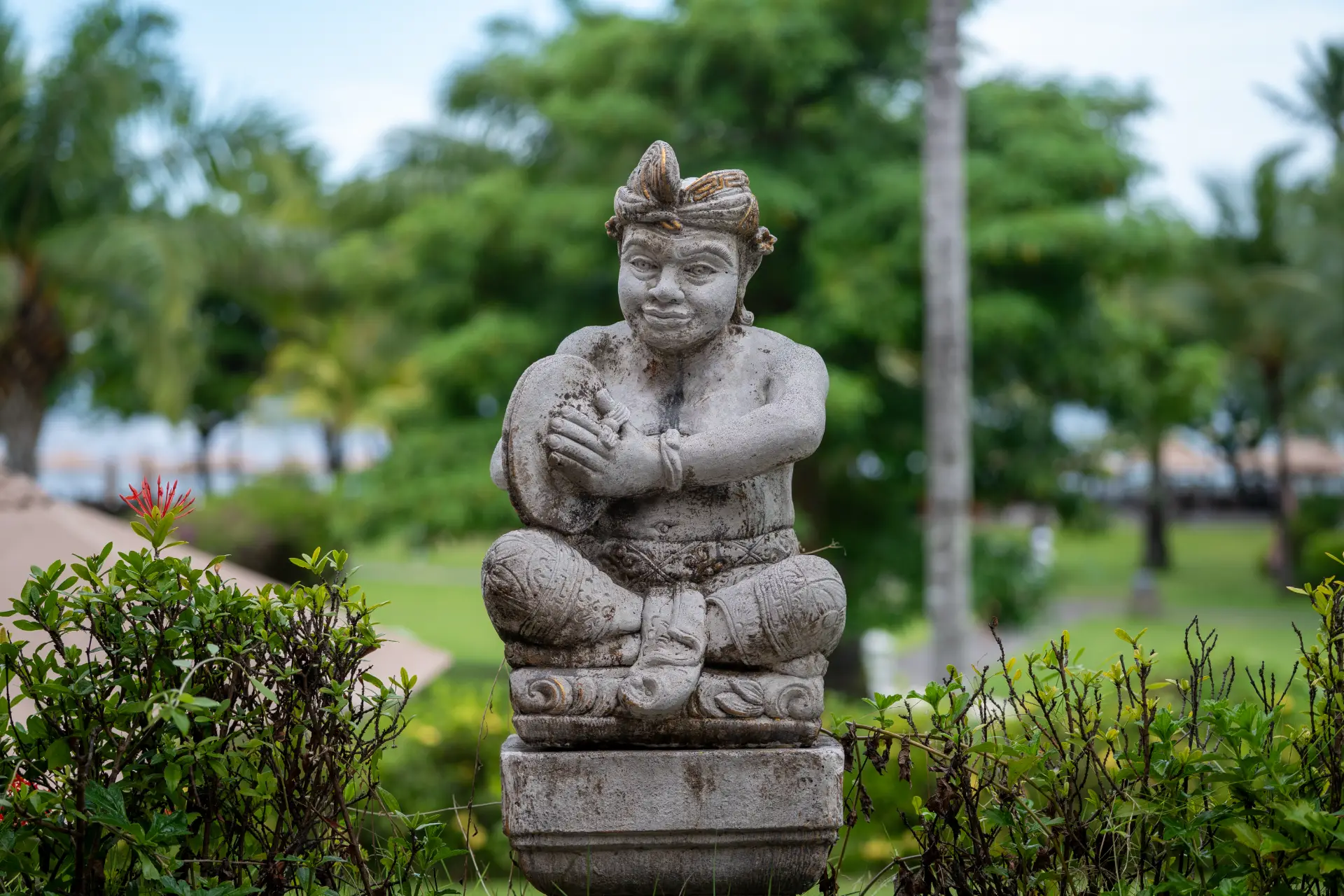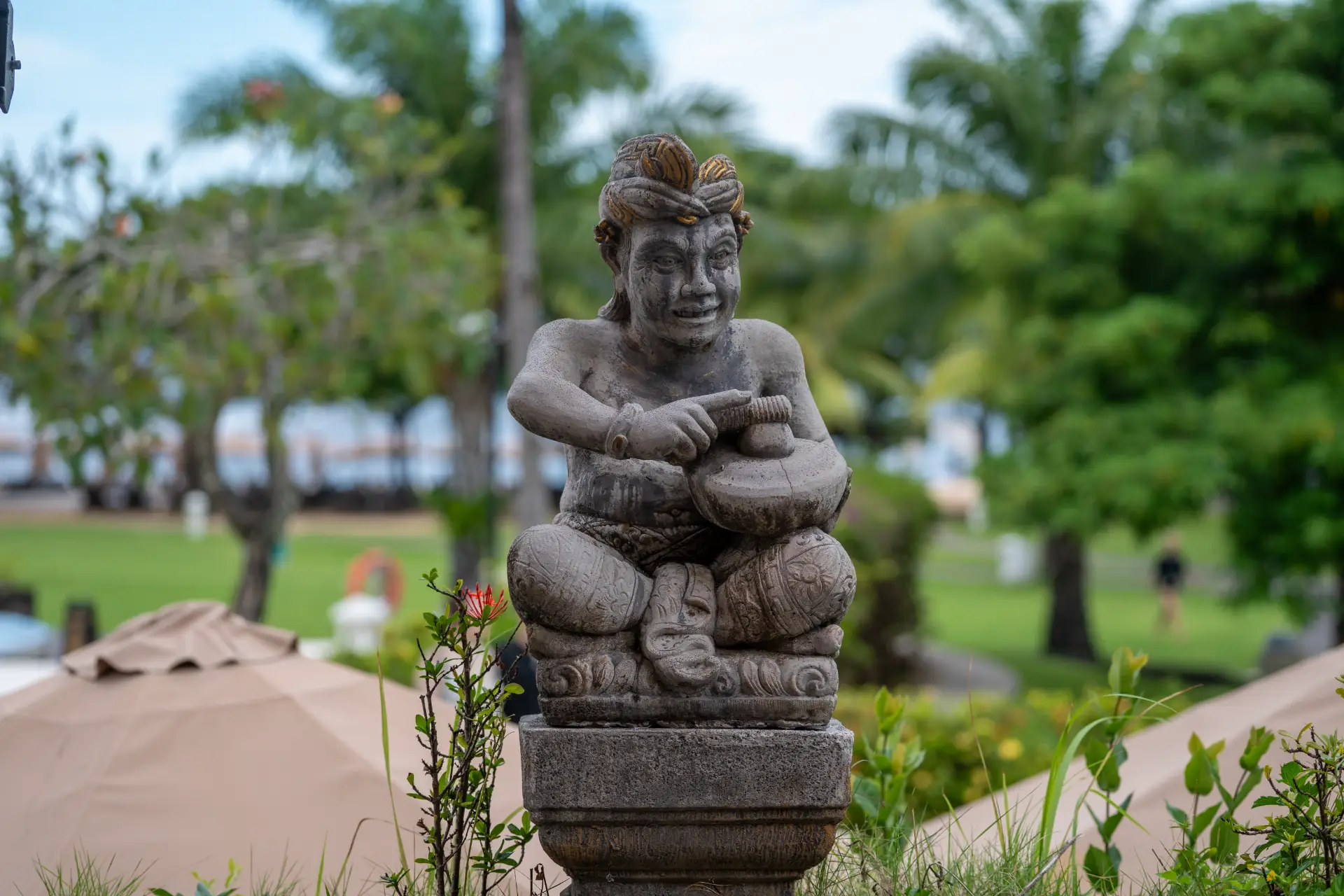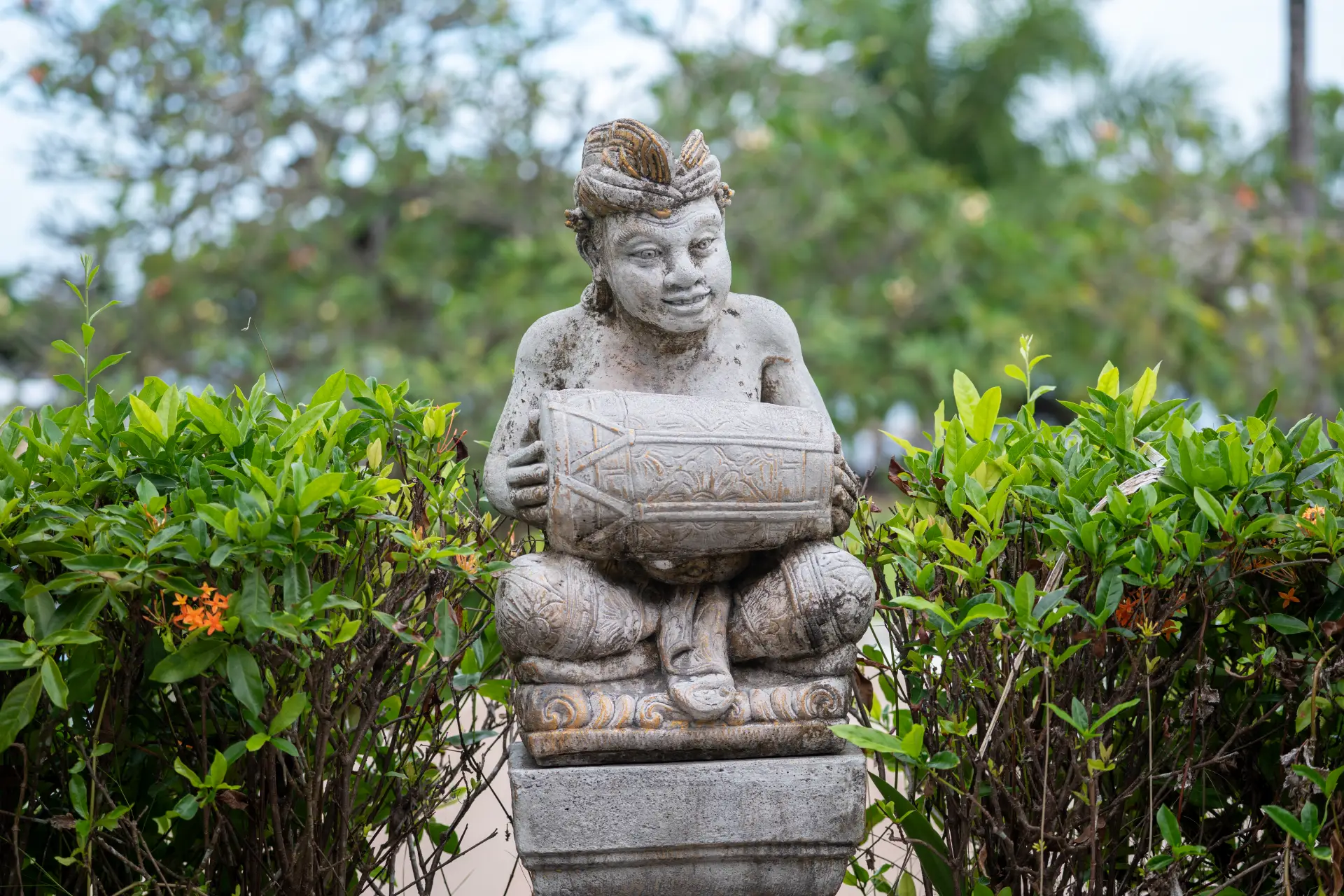
A Balinese human-form sculpture depicting a figure playing a traditional Balinese musical instrument, namely the bamboo suling (flute). The suling is one of the important and unique components in Balinese gamelan ensembles. In a Balinese gamelan ensemble, the suling (bamboo flute) is the only wind instrument (aerophone) that plays a very important role, especially in giving “life” and softness to the gamelan ensemble, which is otherwise dominated by bronze percussion instruments.
- Extending and filling the melody (sound continuity): the characteristic of bronze instruments (such as gangsa or reyong) is that their sound gradually fades (decay) after being struck. The suling functions to connect and sustain these tones so that the melody of the composition (gending) continues to flow without interruption, especially in long sustained notes.
- Providing melodic ornamentation, the suling does not play the basic tone in a rigid way. Its function is as payasan (decoration). The suling player performs a basic melody that is then developed through various cengkok (ornamental melodic patterns), vibrato (pitch oscillation), and complex improvisations, while still following the main melodic framework (pokok gending).
- Providing a soft and expressive nuance amid the typically loud, metallic, and dynamic sound of Balinese gamelan, the suling functions as a balancing element that adds a sweet, melancholic, or serene character. The presence of the suling makes the musical composition feel more alive and gives it a strong emotional dimension.
- Guiding the vocal melody: in performances involving singing (such as Sendratari, Arja, or Drama Gong), the suling often functions to guide the singer (juru tandak) in finding the correct pitch, as well as accompanying the vocal line so that it blends with the rhythm of the gamelan.
To perform the melodic continuity function perfectly, Balinese suling players are required
to master a very difficult breathing technique called ngunjal angkian (circular breathing). Ngunjal angkian is a technique in which the player inhales air through the nose while simultaneously pushing out the air stored in the cheeks through the mouth. With this technique, the suling player can produce continuous tones for tens of minutes without interruption to take a breath. The role of the suling can vary depending on the type of gamelan. In Gong Kebyar gamelan, the suling functions as a decorative and complementary instrument. However, in Pegambuhan gamelan, the large bamboo suling (suling gambuh) actually serves as the main melodic instrument that leads the entire ensemble.