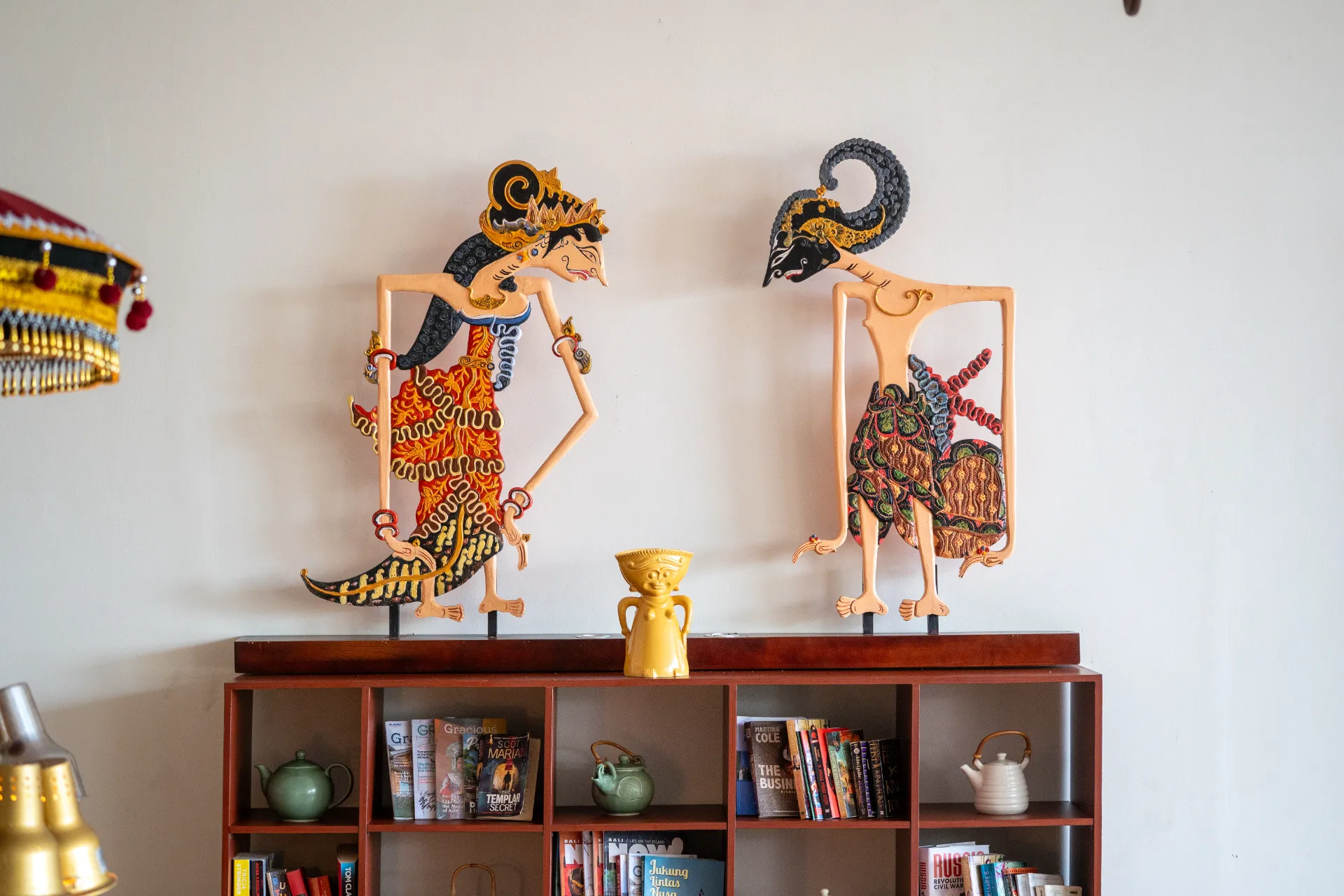
The figures of Rama and Sita made of wood may refer to two distinctive forms of
traditional Indonesian art: wayang golek (three-dimensional wooden puppets) or carved relief sculptures (a form of wall carving typical of Balinese and Javanese art). These two central characters from the Ramayana epic carry profound symbolism of loyalty, wisdom, and true love.The following is an explanation of each form in terms of the visual characteristics of the figures:
- Sri Rama: He is depicted with a face colored green, white, or gold, symbolizing purity and inner serenity. He wears a royal warrior crown (gelung), along with velvet garments adorned with beads and batik cloth featuring noble motifs such as Parang or Sido Mukti. His facial expression is refined and gentle (lanyap), reflecting a character that is wise, noble, and a warrior who upholds and protects dharma (cosmic order and righteousness).
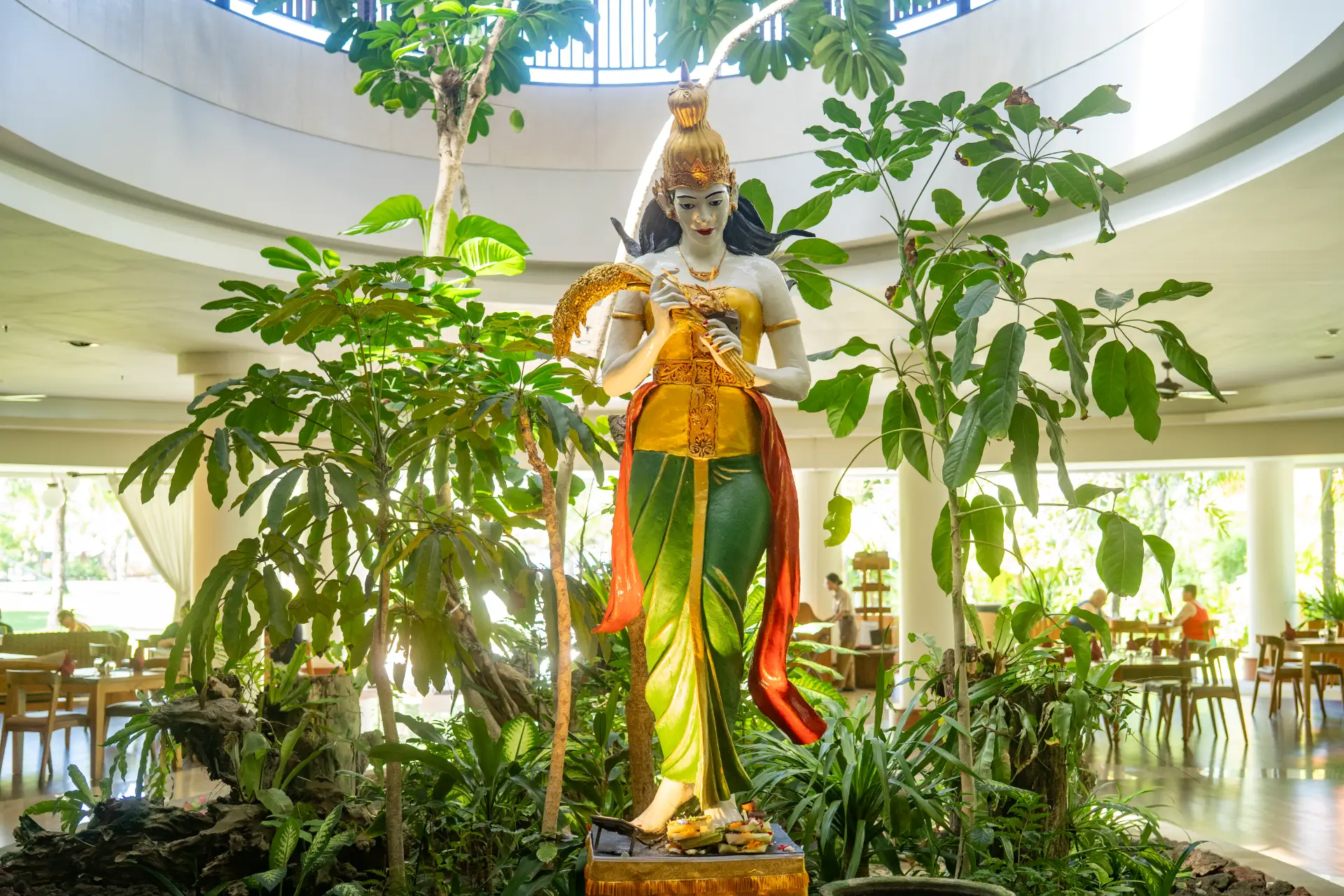
- Dewi Sita (Sinta): She is depicted with an exquisitely beautiful face, fair or light golden complexion, and long hair elegantly arranged in a traditional bun (sanggul). Her gaze is gentle yet profound. The attire she wears reflects the elegance of a queen consort, expressing her steadfast character, purity, and unwavering loyalty to her husband.
Wood Carving Panels / Reliefs (Typical of Bali and Jepara): Wood is also widely used to create figures of Rama and Sita in the form of wall-mounted display panels (relief carvings) or paired statues (patung gandeng). In Bali—especially in renowned carving centers such as Gianyar—wooden depictions of Rama and Sita are highly sought after for their aesthetic value.
These carvings are typically made from premium woods with distinctive natural grain patterns, such as teak (jati), ebony (sonokeling, known for its dark exotic tones), or suwar wood, which is popular in Bali for its natural gradation of dark and light brown hues.
Balinese Carving Aesthetics: In traditional Balinese woodcarving, Rama and Sita are generally depicted within a single iconic scene, such as the episode in the Dandaka Forest where Rama attempts to shoot the Golden Deer at Sita’s request, or the reunion scene after the battle of Alengka. The carvings are highly dynamic and lively, richly filled with intricate vine-like plant motifs (patra) that elegantly surround the figures of the characters.
Philosophical Values of the Rama–Sita Couple: Whether in the form of performance puppets or decorative wooden carvings, representations of Rama and Sita carry profound philosophical meanings within the context of family and household life.
Symbol of Rwa Bhineda and Harmony: This represents the union of masculine energy (lanang), which is courageous and strong, and feminine energy (wadon), which is loving and gentle. Due to their legendary love story, wooden puppet pairs of Rama and Sita are often given as traditional wedding gifts. They symbolize prayers for the newlyweds to maintain lifelong fidelity, to remain strong through life’s challenges, and to always be blessed with harmony in their relationship.