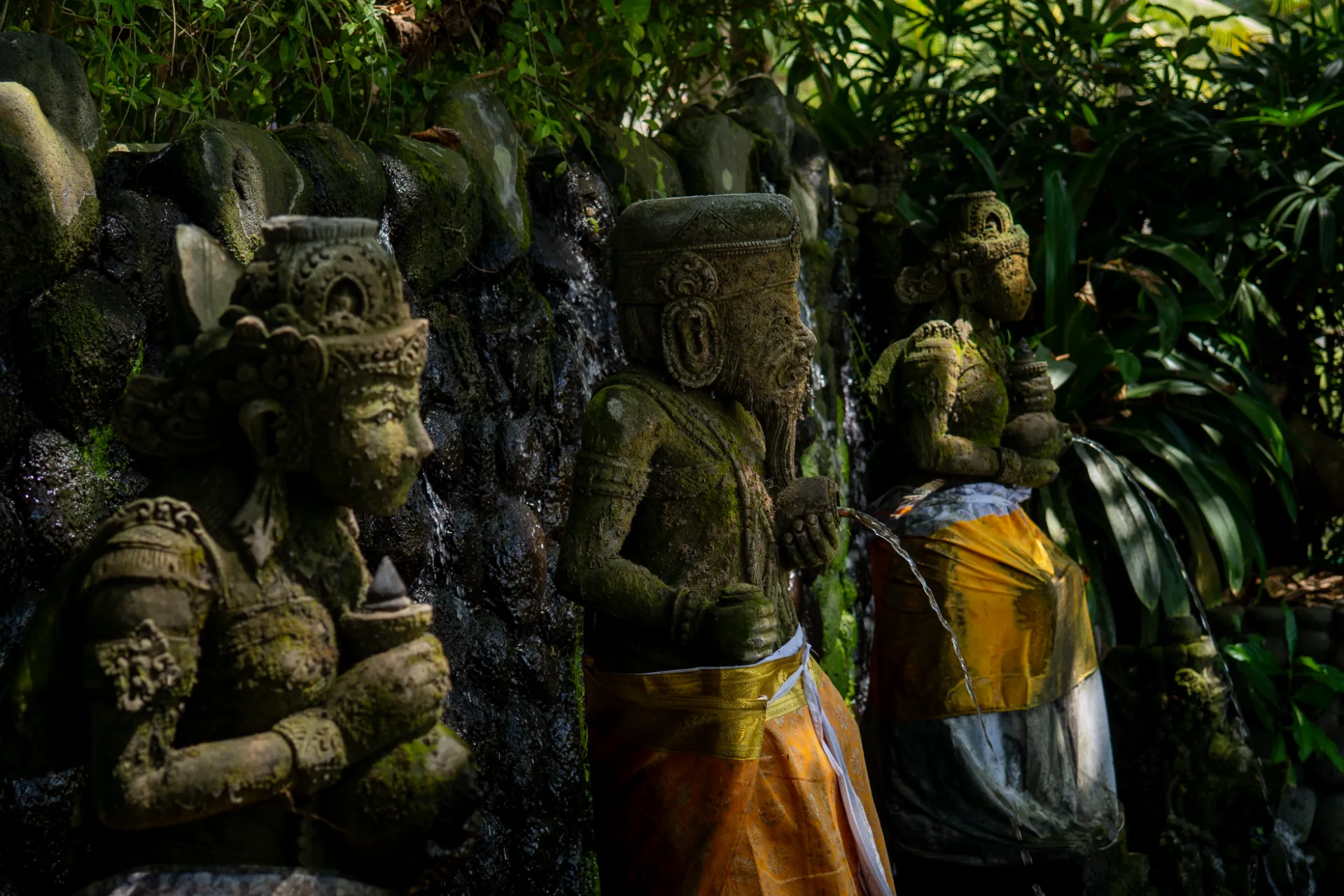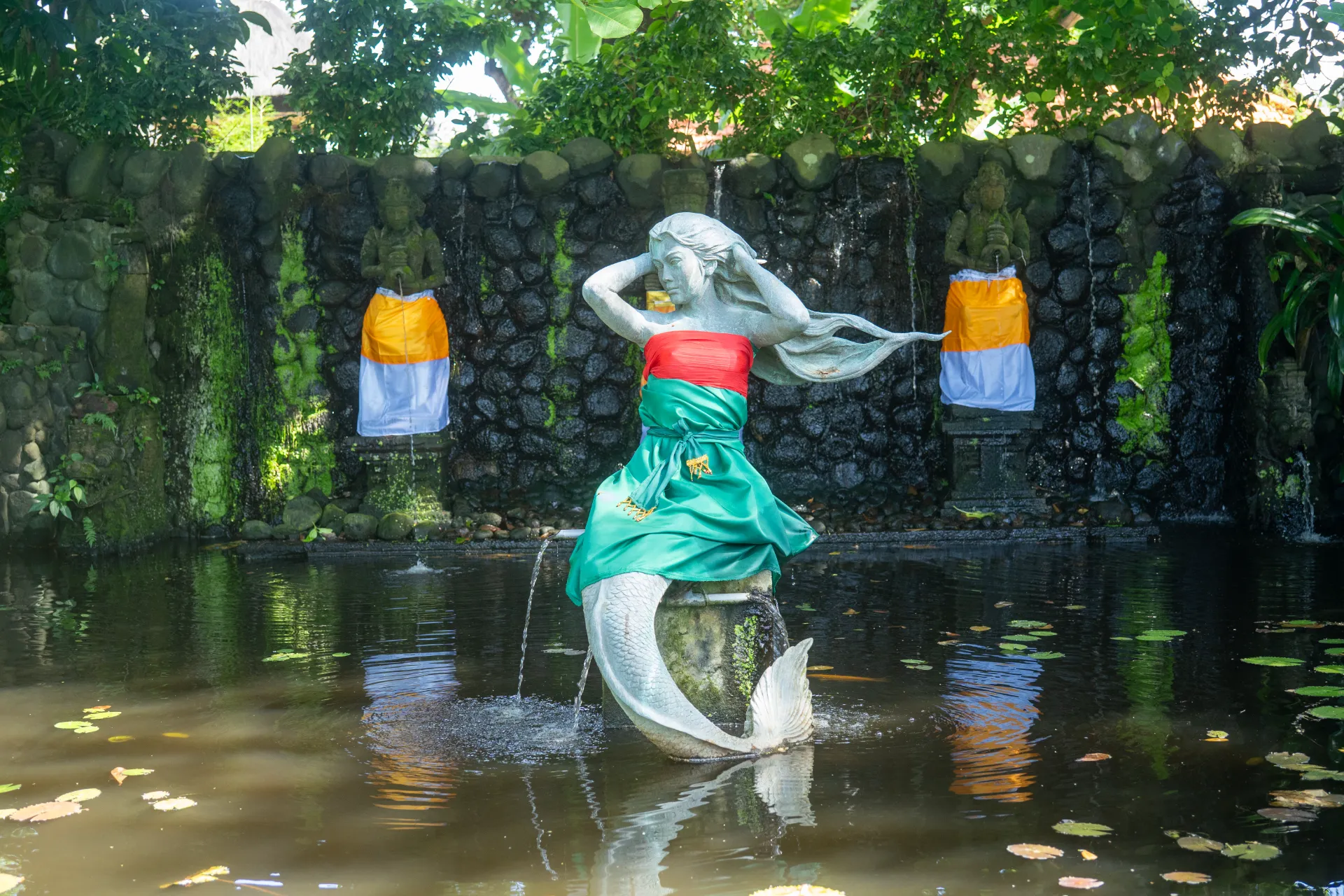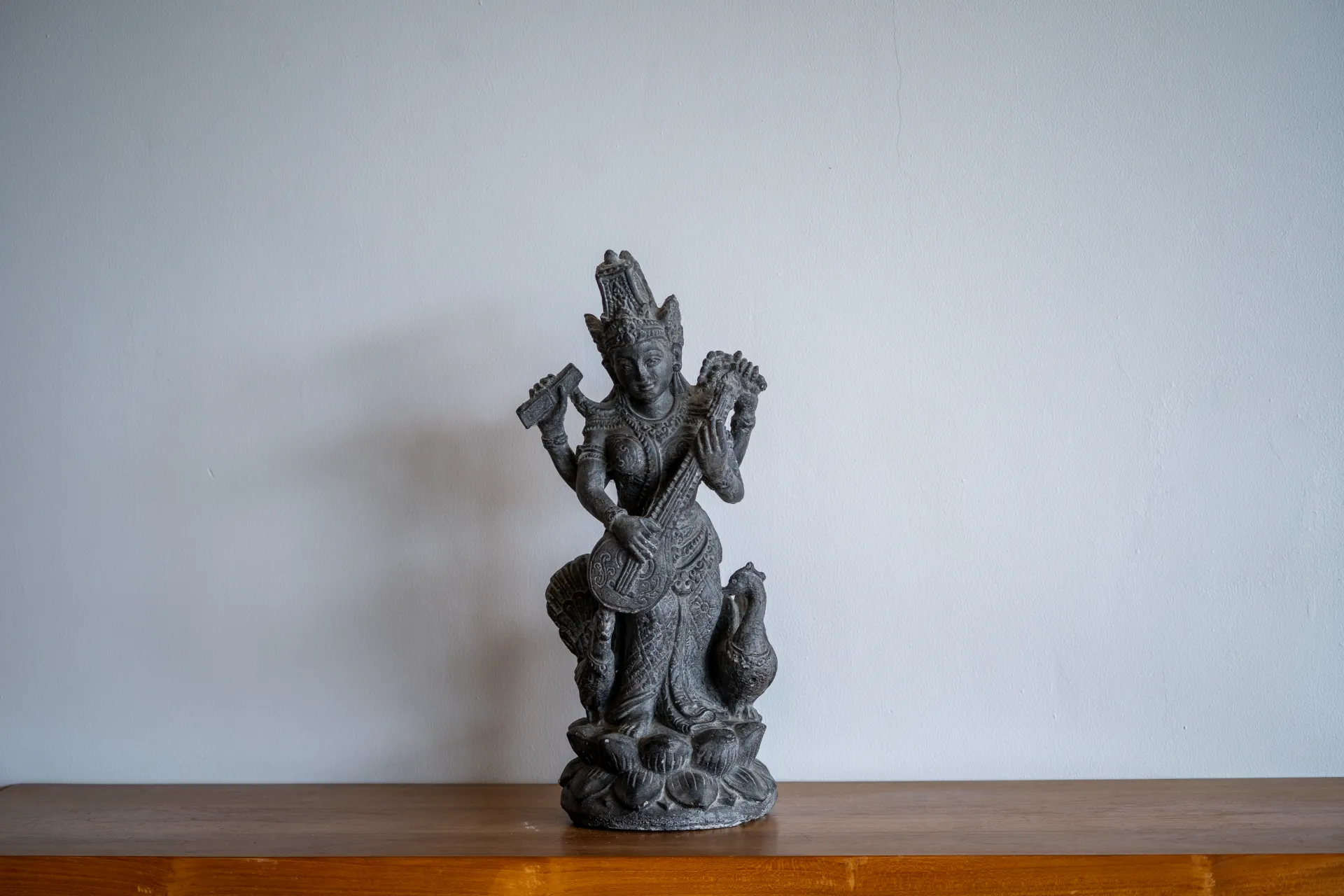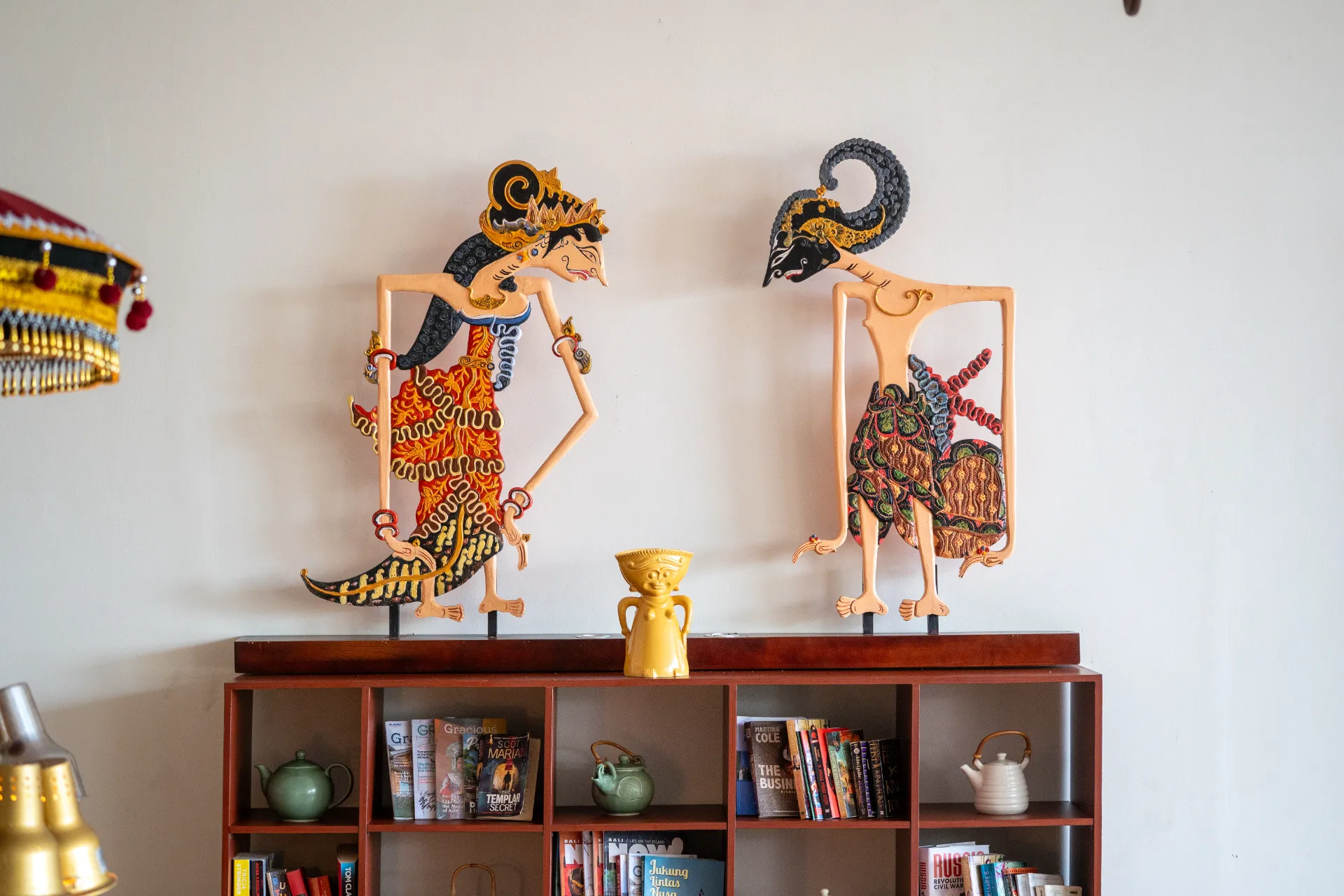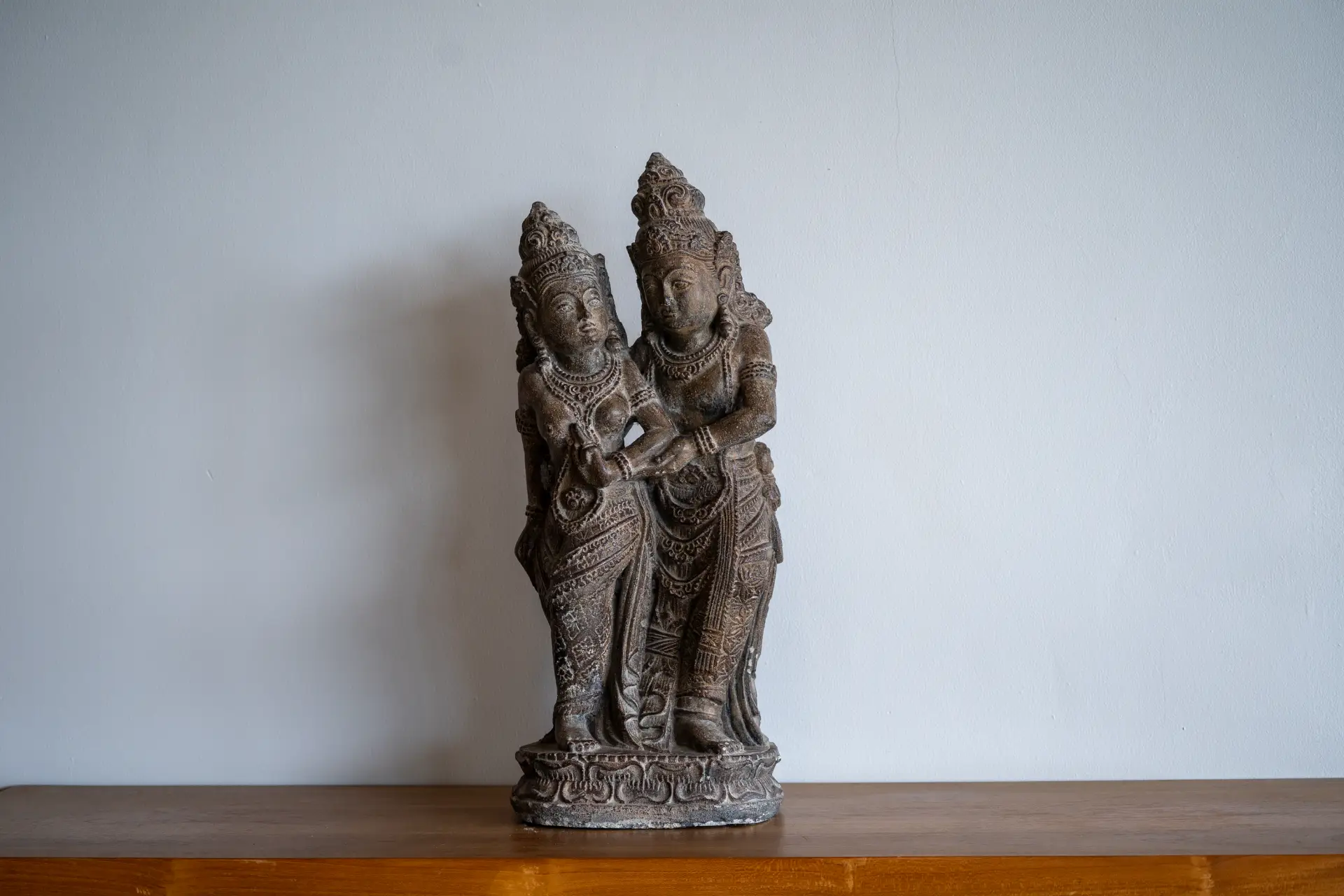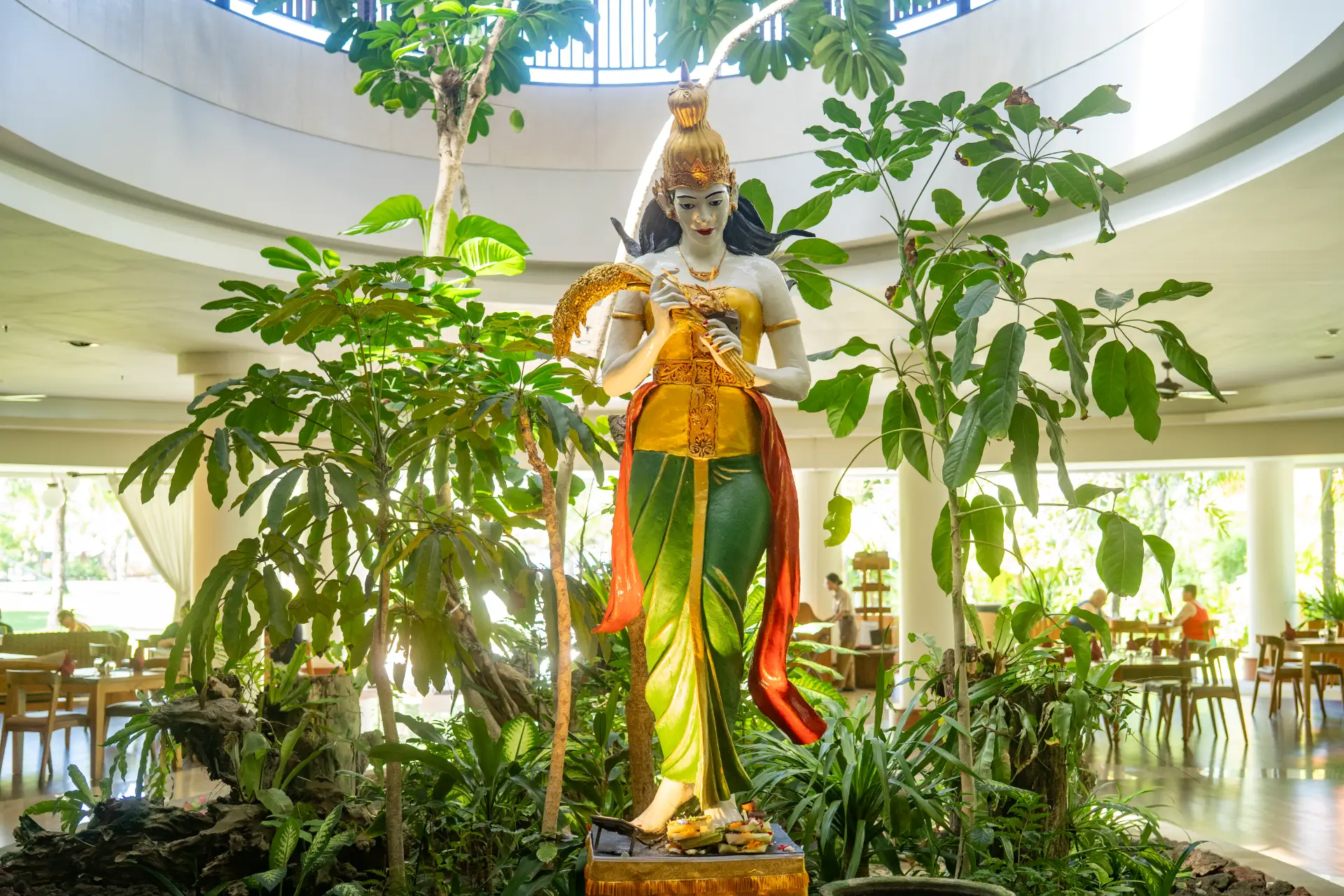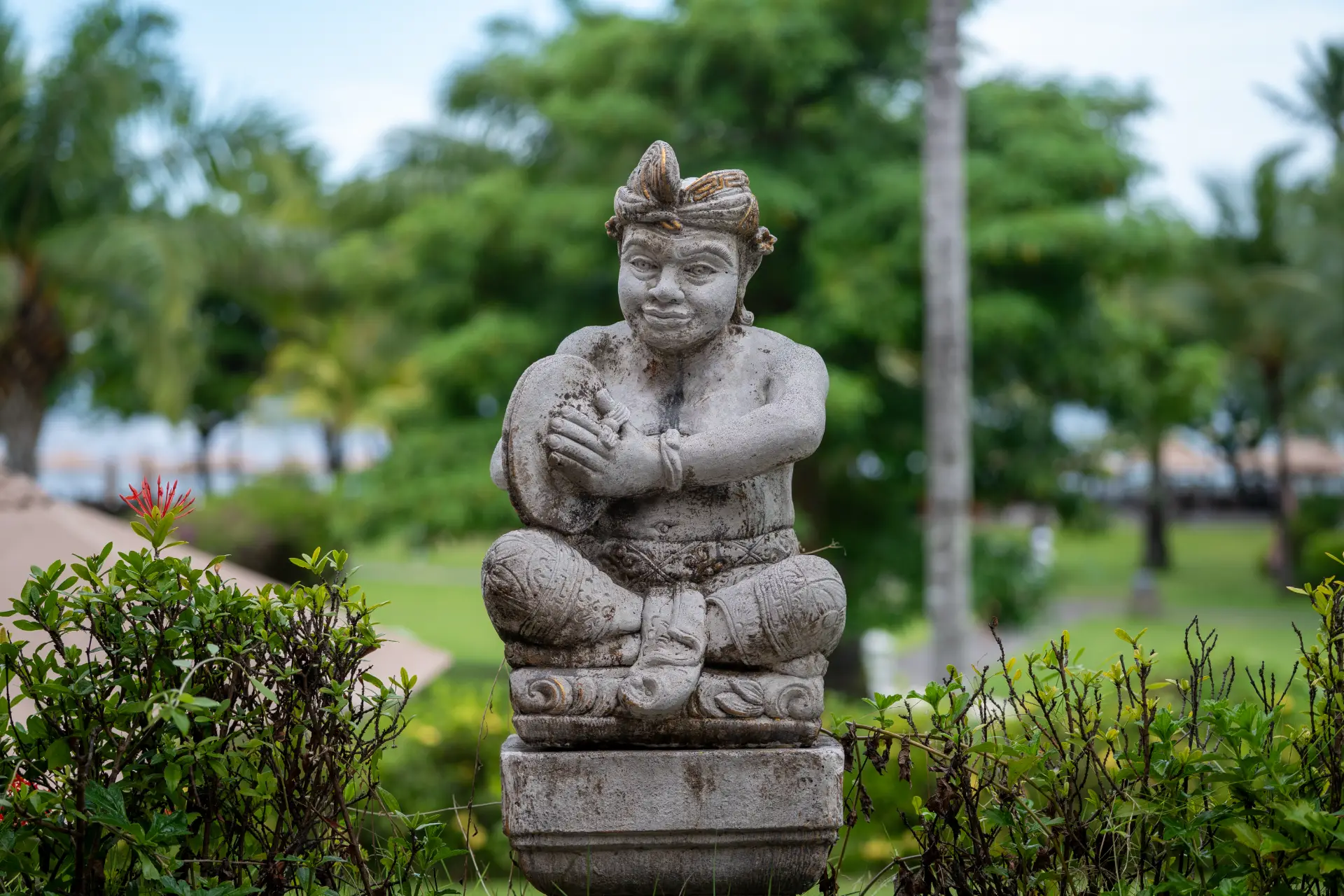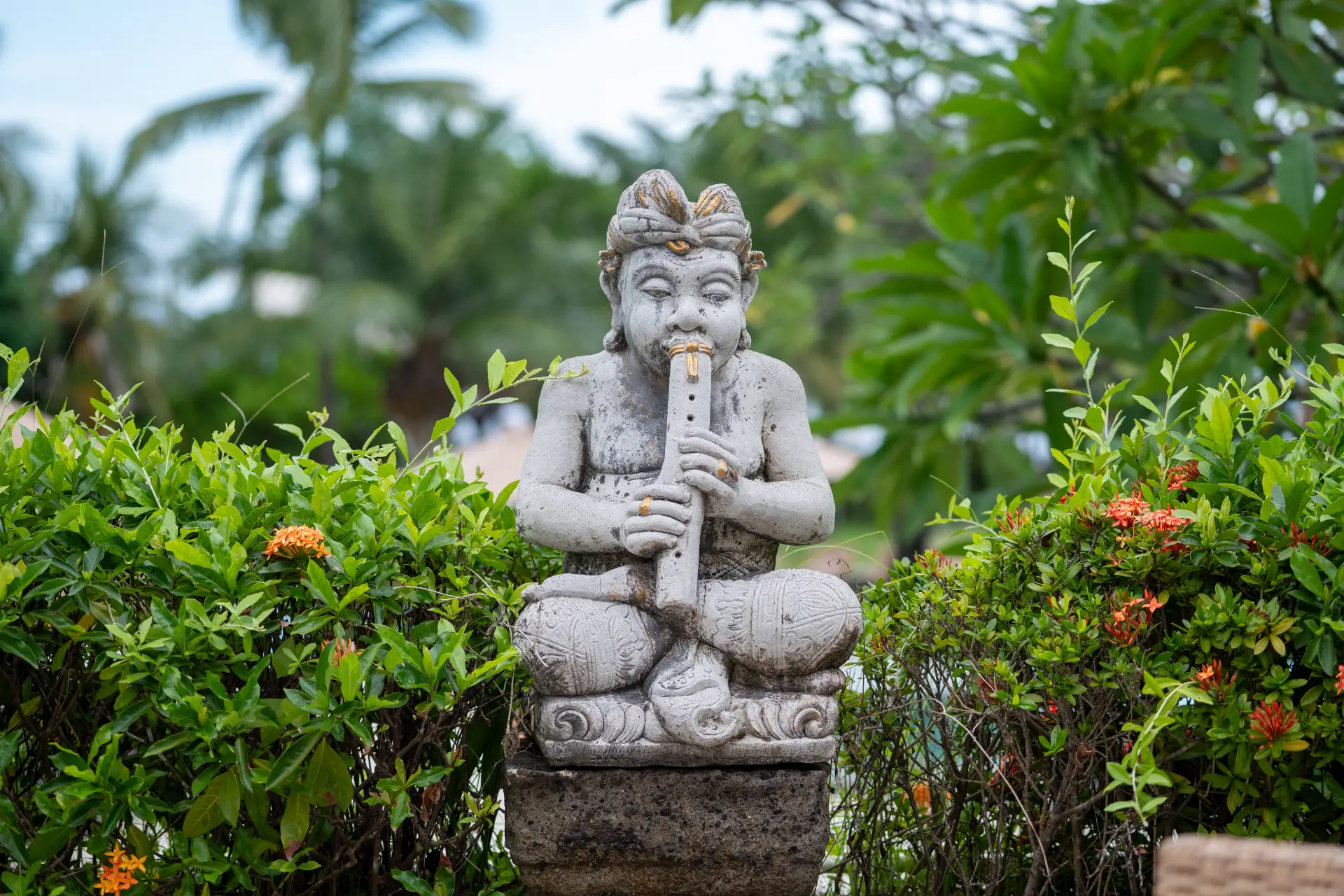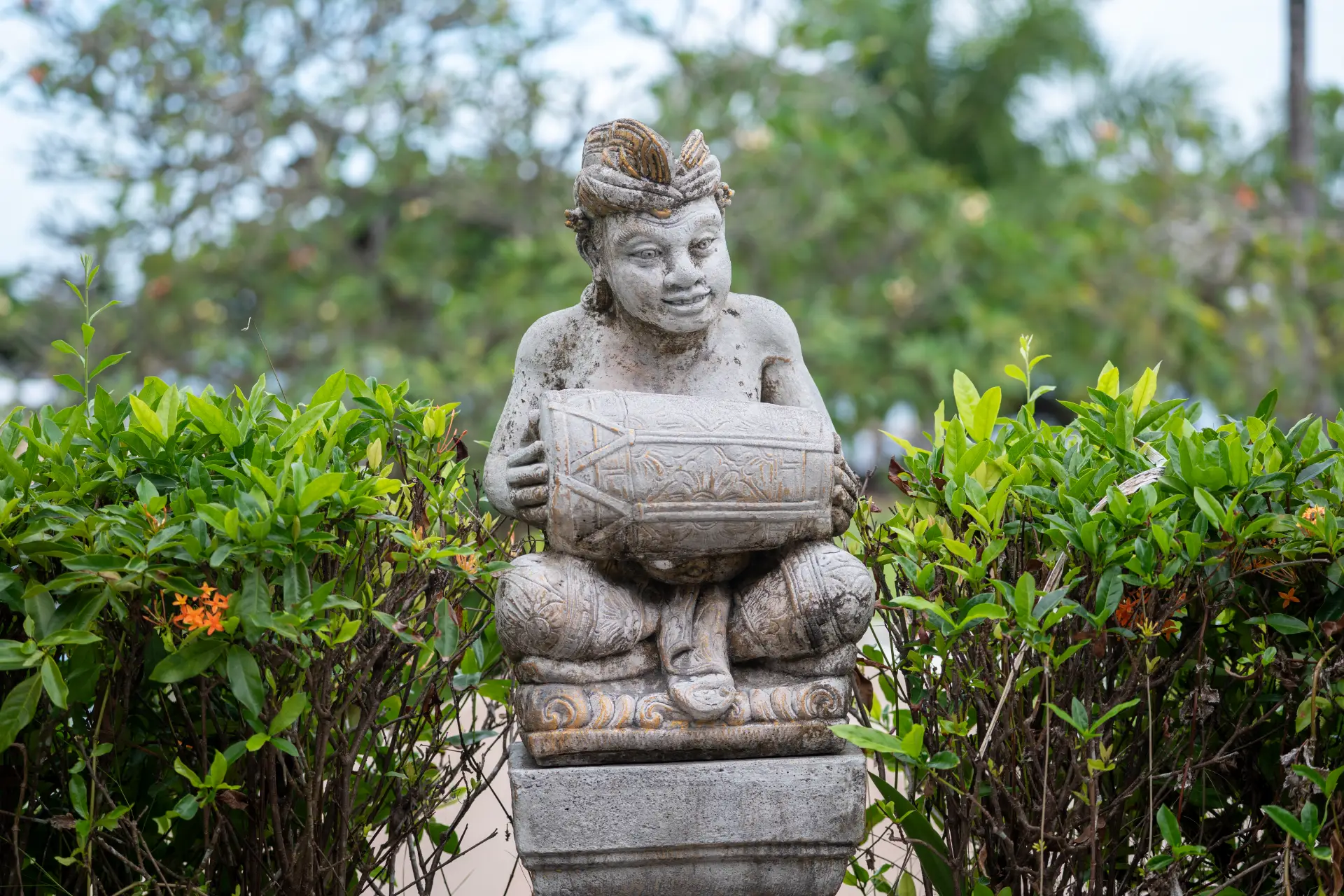
A Balinese human-form sculpture depicting a figure playing a traditional Balinese percussion instrument known as the Kajar. In a Balinese gamelan ensemble, the kajar is a very crucial rhythm-linking instrument. Physically, the kajar consists of a single knobbed gong (similar to a small gong) placed on a wooden base (pangkonan) in the shape of a box or cross. The central boss (pencu) is relatively flat or low. The main function of the kajar instrument in Balinese gamelan is:
- As the tempo keeper (metronome/tempo controller), the most fundamental function of the kajar is to act as a walking metronome. The kajar is struck consistently to maintain the stability of the tempo of all instruments in the gamelan ensemble so that they do not rush ahead or slow down.
- As a connector between the kendang and other percussion instruments, although the kendang is the leader of rhythm (conductor) that gives cues (angsel), its sound can sometimes become less clearly heard amid the loud and dense sound of the gamelan ensemble. This is where the kajar functions to emphasize and translate the beats from the kendang, so that players of melodic instruments (such as gangsa and reyong) can hear the rhythm clearly.
- Regulating tempo dynamics (acceleration and deceleration): when the kendang gives a cue to speed up (ngencengang) or slow down (ngesuan) the tempo, the kajar immediately captures this signal and adjusts the density of its strokes. This change in the kajar’s rhythm is then instantly followed by all other musicians in the ensemble.
- Determining the structure of the composition (matri), the kajar’s strokes also function as markers of musical structure, especially in lelambatan (classical) compositions. The kajar helps musicians count the number of beats before the arrival of the large gong or other structural instruments such as the kempur and kempli. The technique of playing or striking the kajar is very unique and is called “kecek.” The right hand strikes the boss (pencu) using a beater (pangul) wrapped in cloth or rope, while the left hand mutes (presses) the surface of the bronze key so that it does not produce a long resonating sound (muted sound). Therefore, the kajar does not produce a “byang” sound, but instead a short and firm sound such as “tuk… tuk… tuk…” or “puk… puk… puk…”. In some specialized gamelan ensembles (such as Gong Gede or Pegulingan music), this beat-keeping function is sometimes shared or replaced by similar instruments called kempli or klenang, depending on the structure and type of the composition being performed.