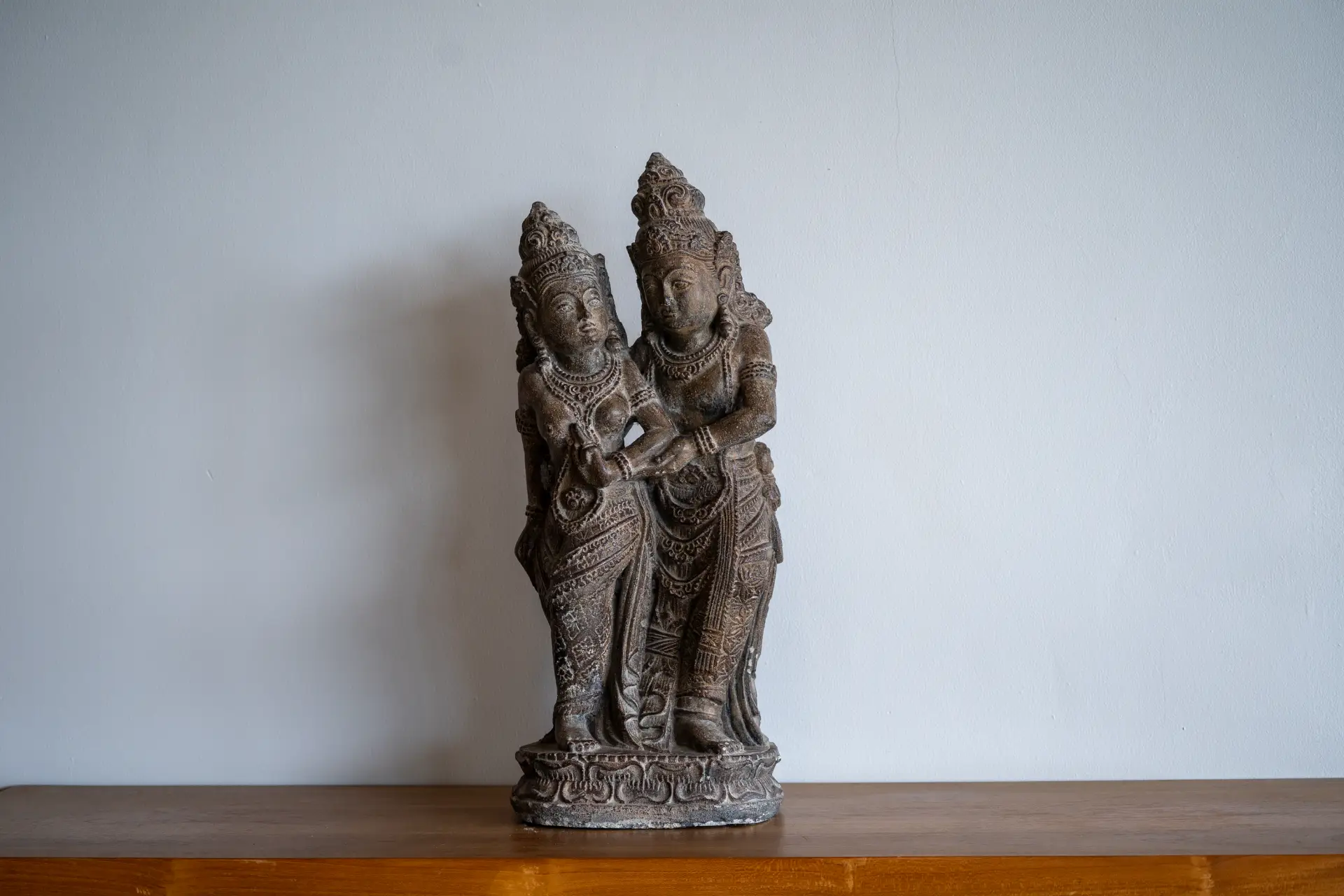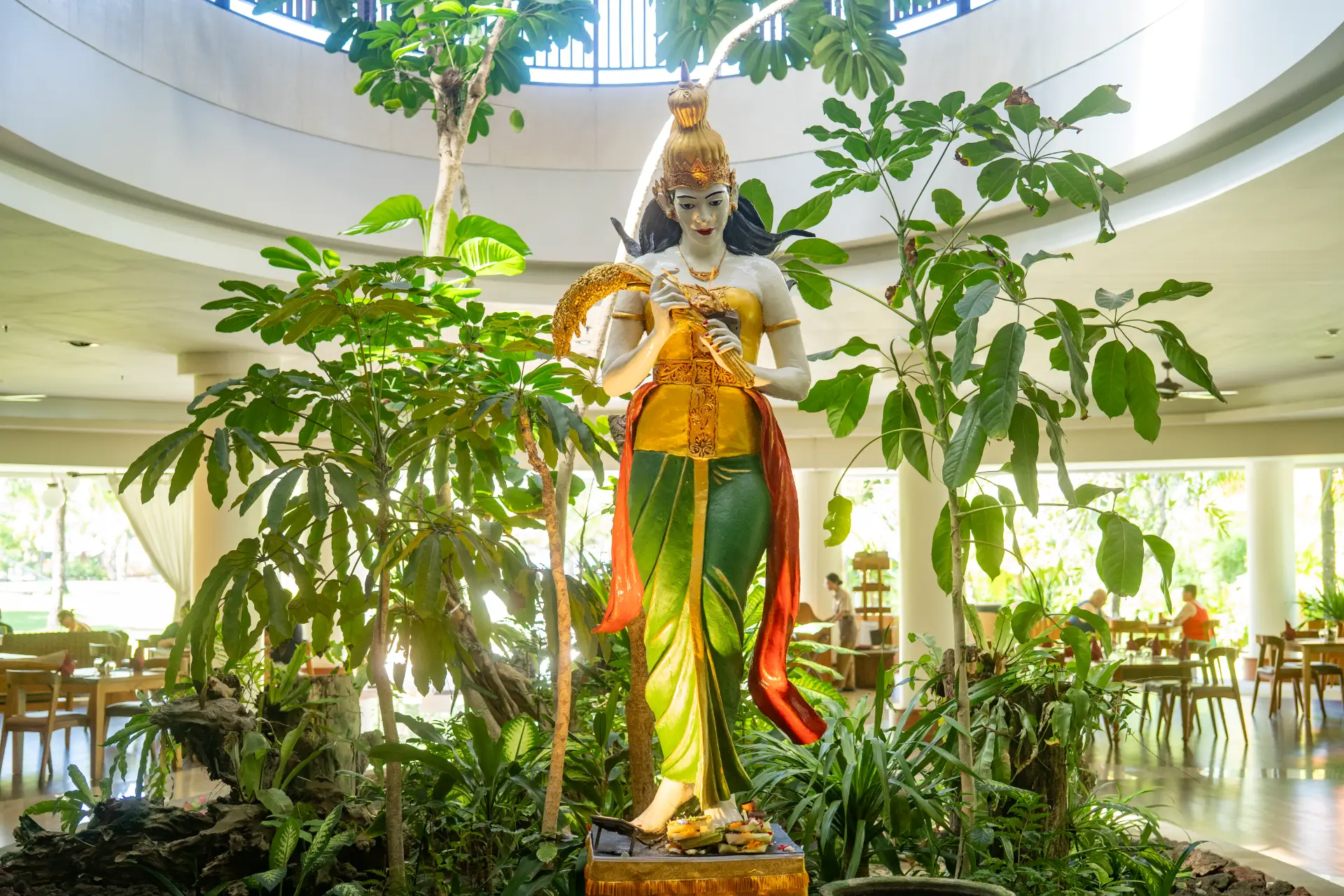
Similar to Rama and Sita, the depiction of Arjuna and Dewi Drupadi in wooden puppet displays also carries high aesthetic appeal and profound philosophical meaning. Drawn from the Mahabharata epic, this pair represents the combination of a foremost noble warrior of great handsomeness and a princess with extraordinary firmness of principle.
The following explains their visual characteristics, forms, and philosophical meanings in wooden wayang art:
1. Visual characteristics of wayang golek/wooden sculpture
When represented as three-dimensional wayang golek or carved wooden statues (such as those made from Balinese suwar wood or teak), the details of both characters are crafted with great precision.
Arjuna (Dananjaya): He is depicted as handsome and slender-faced, with refined and graceful facial features. His eyes are soft and focused, reflecting calmness, inner control, and deep concentration.
His eyes are shaped like vegetables (sayuran), meaning slightly narrowed and gently lowered (sipit, merunduk lembut), reflecting a character that is humble, intelligent, authoritative, and endowed with deep inner concentration. On his head, he wears a gelung supit urang crown (a hair bun shaped like a shrimp claw curling backward), signifying his status as a principal warrior. On his body, he is often depicted with accessories such as a bow and arrows (Pasupati), his signature weapons.
Dewi Drupadi: Her face and hair are carved with an exceptionally beautiful, firm yet graceful expression. One of Drupadi’s most iconic features is her long, thick black hair. In some detailed carvings, her hair is depicted as flowing loose, symbolizing her vow after the dice game incident in Hastinapura.
She is dressed in magnificent royal court attire befitting a queen consort, with an elegantly styled divine hair bun (gelung kedewatan). She radiates the aura of a queen who is independent, intelligent, and unwavering in the face of injustice.
2. Aesthetics and Carving Styles (Bali vs. Java)
Balinese Style (Relief Carving & Suwar Sculpture): In this style, figures of Arjuna and Drupadi are typically carved in a highly dynamic and gracefully flowing manner. Their clothing is richly adorned with intricate patra (tendrils and leaf motifs) carvings that are highly detailed. Their body movements are rendered in a more fluid and expressive way, often capturing romantic moments or scenes of spiritual intimacy between the couple.
3. Philosophical Meaning as Home Decor
Placing wooden sculptures of Arjuna and Drupadi inside a room or home carries a distinct symbolic meaning. It represents the union of life skills and principles: Arjuna embodies sharp focus, discipline, and capability as a master archer and warrior, while Drupadi symbolizes self-respect, loyalty, and unwavering principles that cannot be compromised. The union of both reflects a household built on the foundation of competence and integrity. Their presence as wall décor or tabletop sculptures also symbolizes harmony between strong masculine traits (Arjuna) and powerful, dignified feminine qualities (Drupadi). Aesthetic and “magical” visual appeal: Visually, the slender curves of Arjuna’s wooden form combined with Drupadi’s elegance create a refined ethnic-classical aesthetic. At the same time, they evoke a spiritual and intellectual atmosphere rooted in the great epic traditions of the Nusantara world.