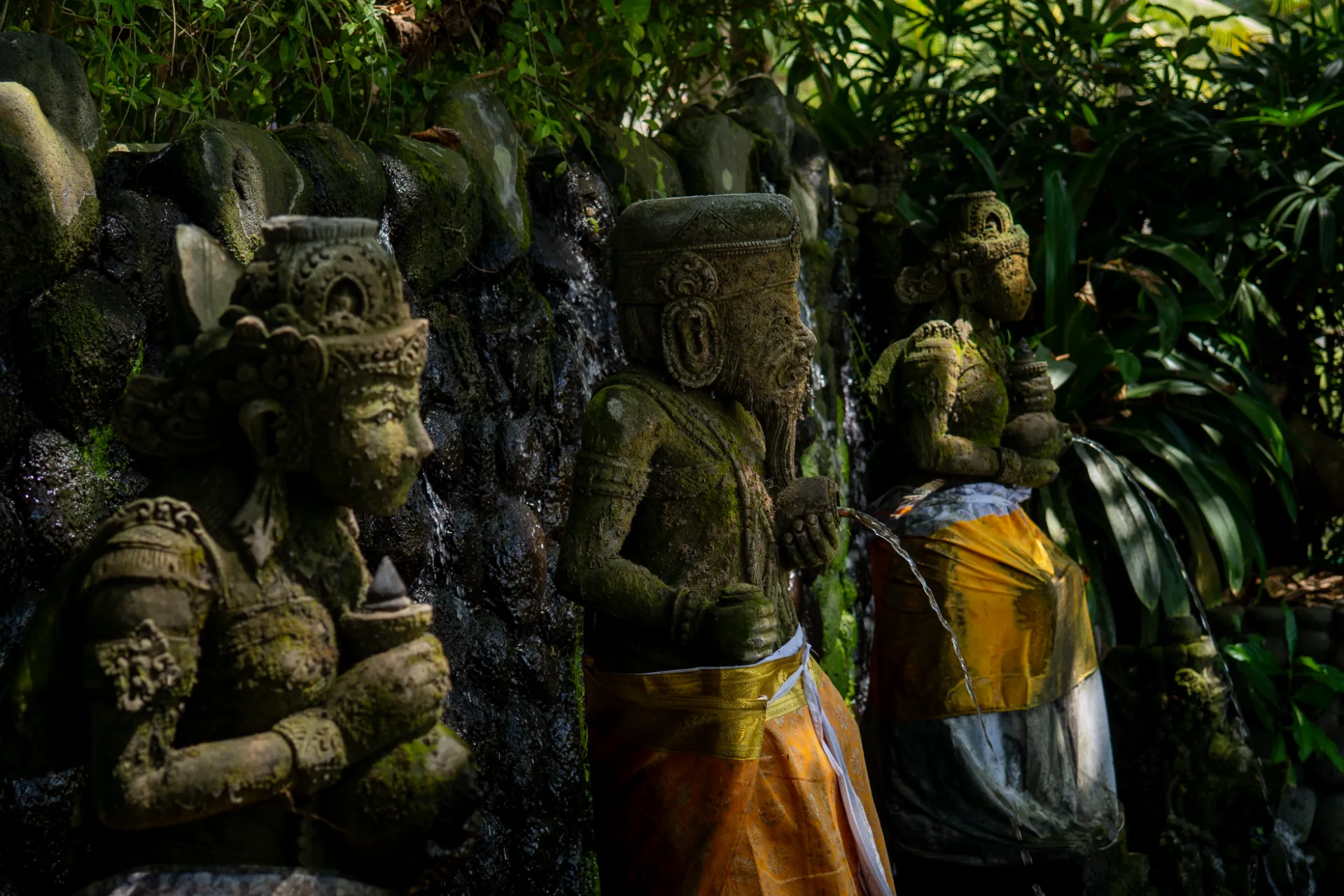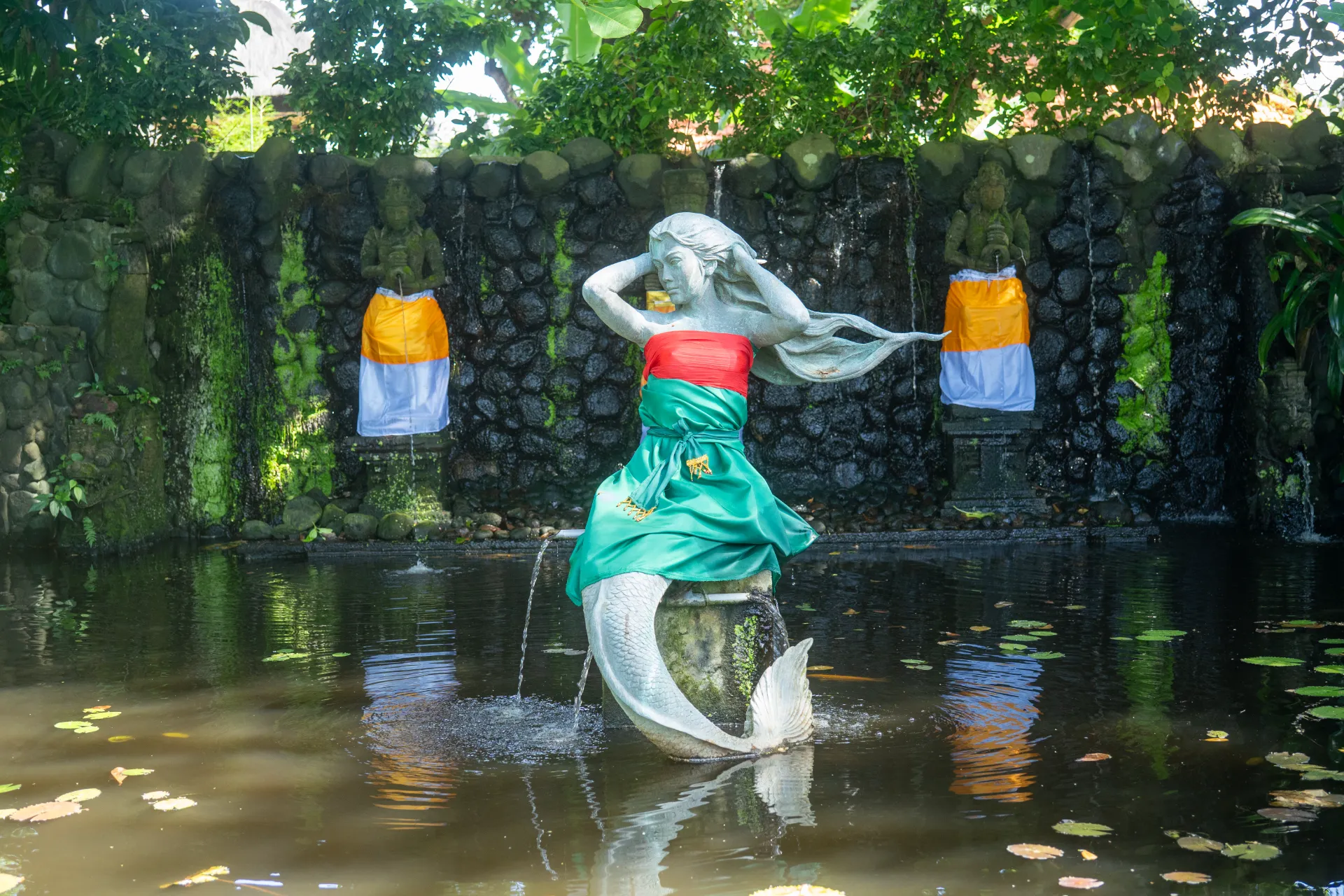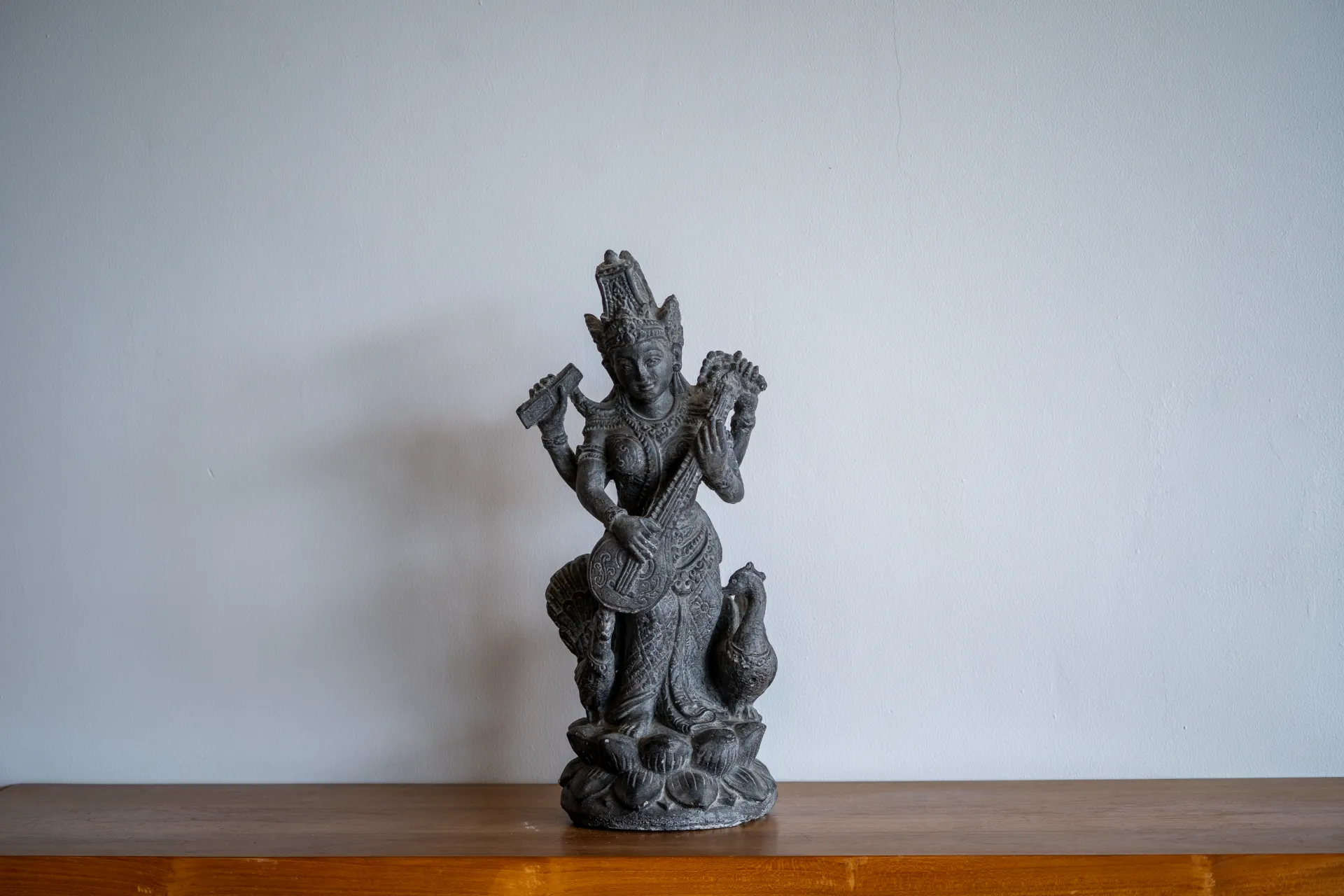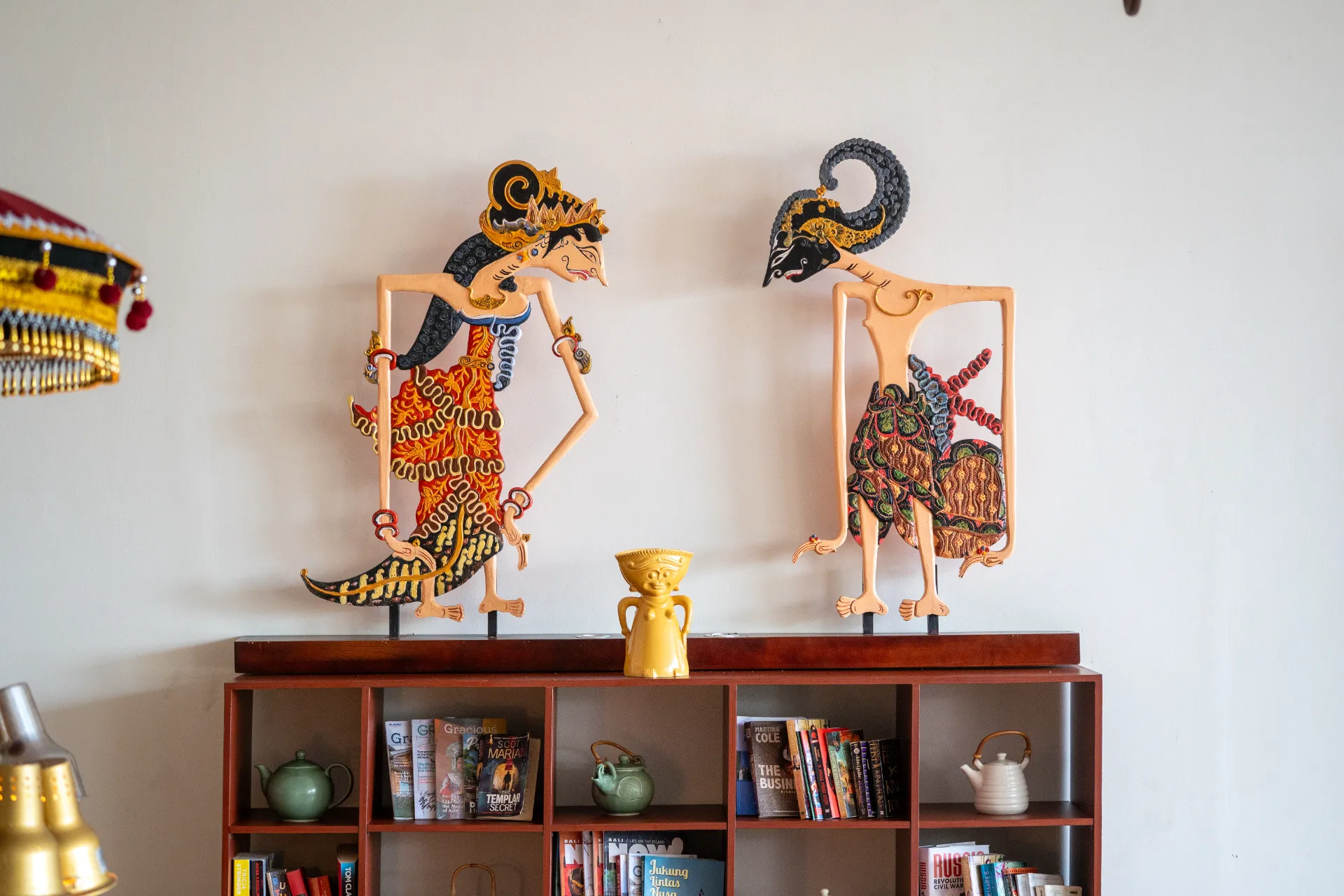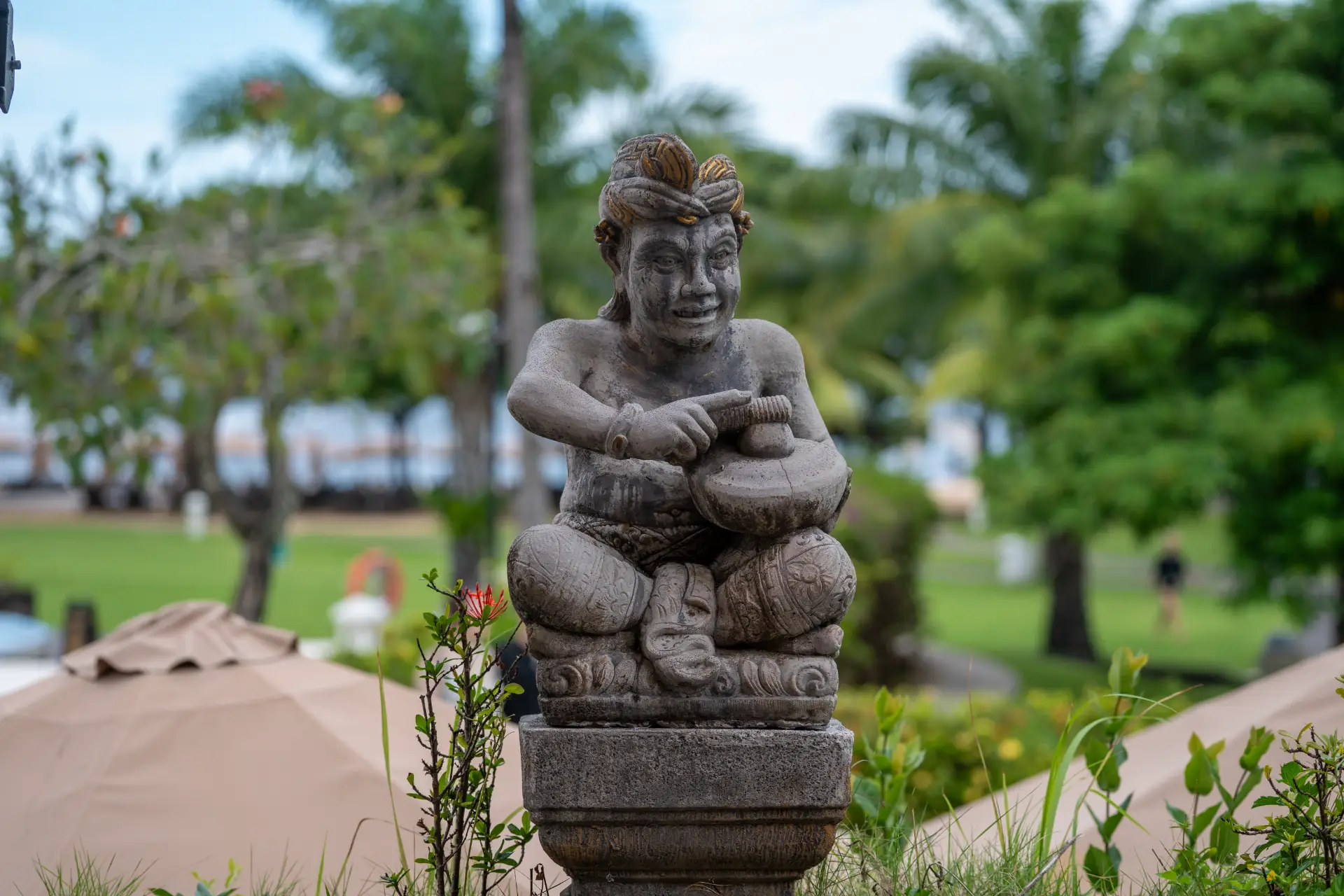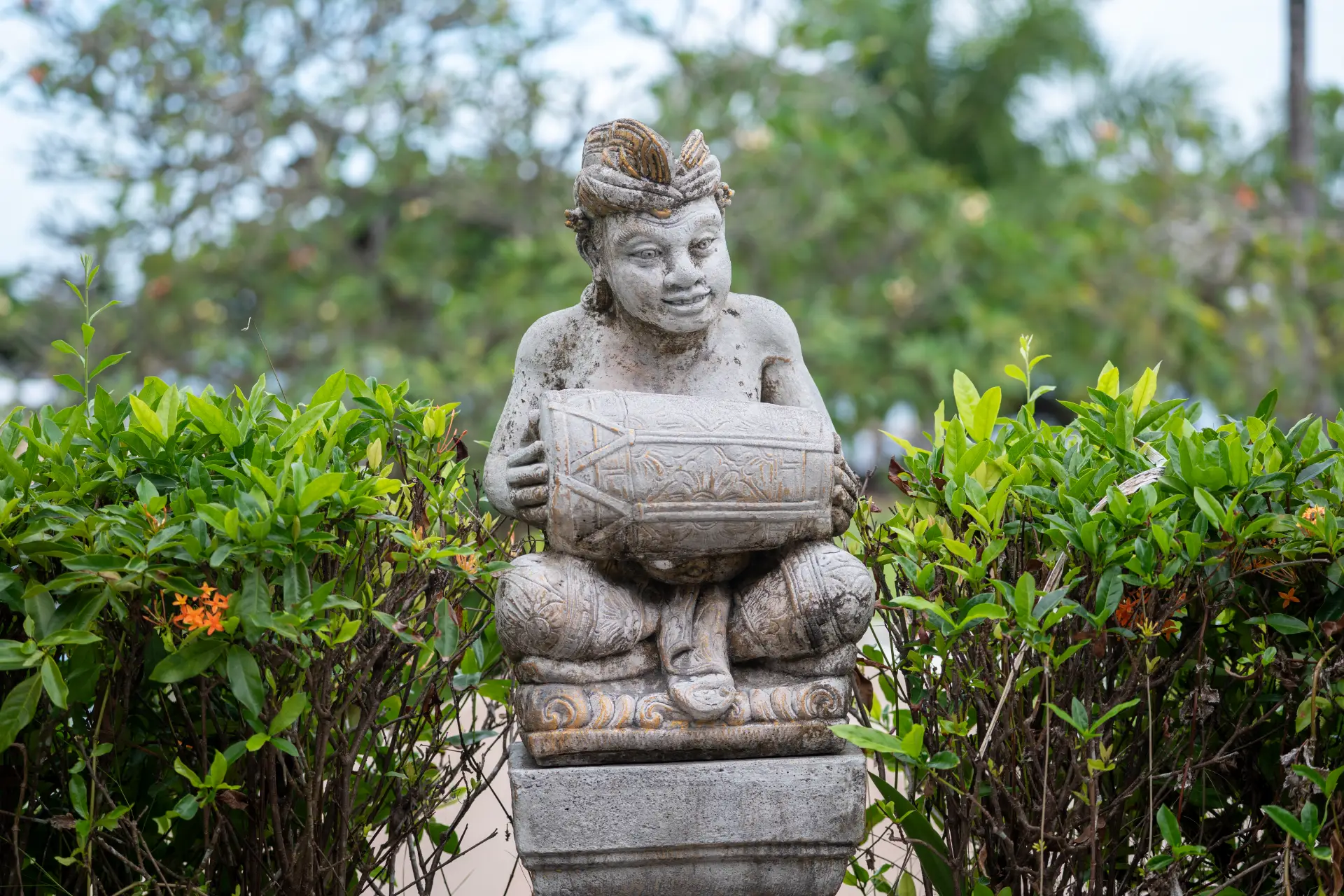
A Balinese human-form sculpture depicting a figure playing a traditional Balinese musical instrument called cengceng. As a complementary instrument within Balinese percussion/gamelan ensembles, the cengceng has a specific form and function when played. The cengceng (also often written as ceng-ceng) is a small bronze cymbal-like percussion instrument that plays a very vital role in giving a distinctive sound color to Balinese gamelan music. If the suling provides “life” through soft melodic lines, then the cengceng provides energy, dynamism, and powerful accents. The main functions of the cengceng in a Balinese gamelan ensemble are as follows:
- Provider of Dynamics and Accents (Angsel). The cengceng is the primary instrument responsible for emphasizing angsel (sudden rhythmic changes or sharp, broken movements in Balinese dance and music). When the kendang gives a cue to create a rhythmic surprise, the cengceng responds with loud, synchronized strikes (ngencak), producing a powerful and dramatic effect.
- Filling Rhythmic Gaps and Interlocking Rhythms (Ubit-ubitan): Similar to the gangsa instrument, the ceng-ceng also performs rapid interlocking rhythmic patterns, known as kotekan or ubit-ubitan. The ceng-ceng fills the spaces between the main beats, creating a dense, lively, and continuous rhythmic texture, ensuring that no rhythmic gaps are left in the gamelan ensemble.
- Creating Energy and Atmosphere (Tonal Character): The bright, ringing sound of the ceng-ceng plays an important role in creating the atmosphere of a performance. In the Gamelan Baleganjur (a processional gamelan ensemble), the ceng-ceng is played with great intensity and aggression to energize participants carrying ogoh-ogoh effigies or accompanying ceremonial processions. In the Gamelan Gong Kebyar, the instrument's rapid rhythmic patterns contribute to a sense of modernity, agility, and exuberance. There are two main types of ceng-ceng based on their function in Balinese gamelan practice, each used in different ensembles: ceng-ceng kopyak and ceng-ceng ricik. Ceng-ceng kopyak, as shown in the sculpture holding the instrument, consists of two large cymbals held directly in the hands without a wooden frame. It is commonly used in Gamelan Baleganjur and Gong Gede ensembles and is typically played simultaneously by several performers. Ceng-ceng ricik, on the other hand, consists of several small cymbals permanently mounted on a carved wooden base—often sculpted in the form of a turtle (Bedawang). The instrument is played by striking these mounted cymbals with two separate handheld cymbals.Philosophical Symbolism of the Turtle (Bedawang Nala): The wooden base of the ceng-ceng ricik is almost always carved to resemble a turtle. In Balinese Hindu mythology, this turtle represents Bedawang Nala, the cosmic turtle believed to support the earth. This symbolism reflects the role of the ceng-ceng as a strong rhythmic foundation, providing stability and supporting the unity and coherence of the interlocking musical textures produced by the other instruments within a gamelan ensemble.