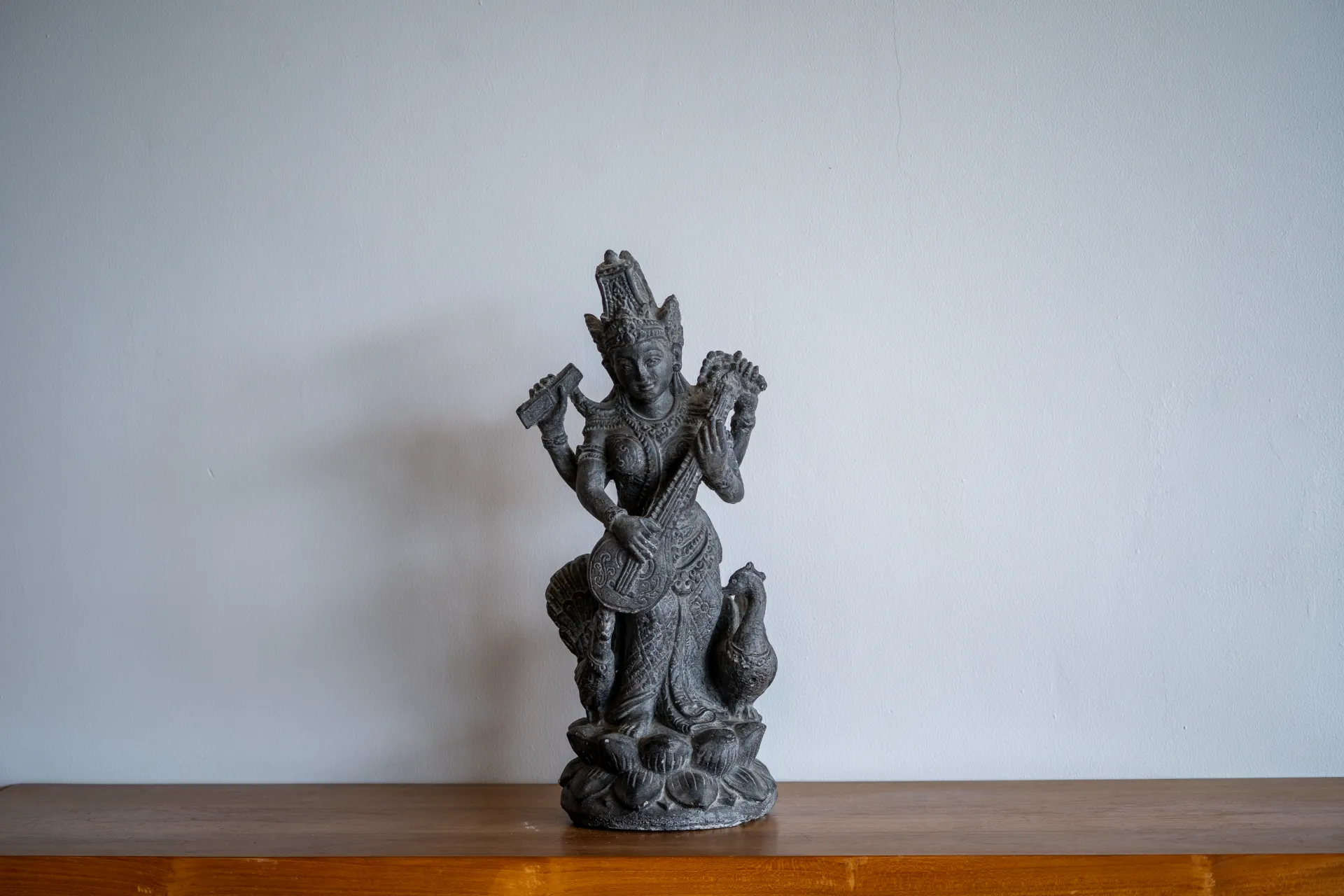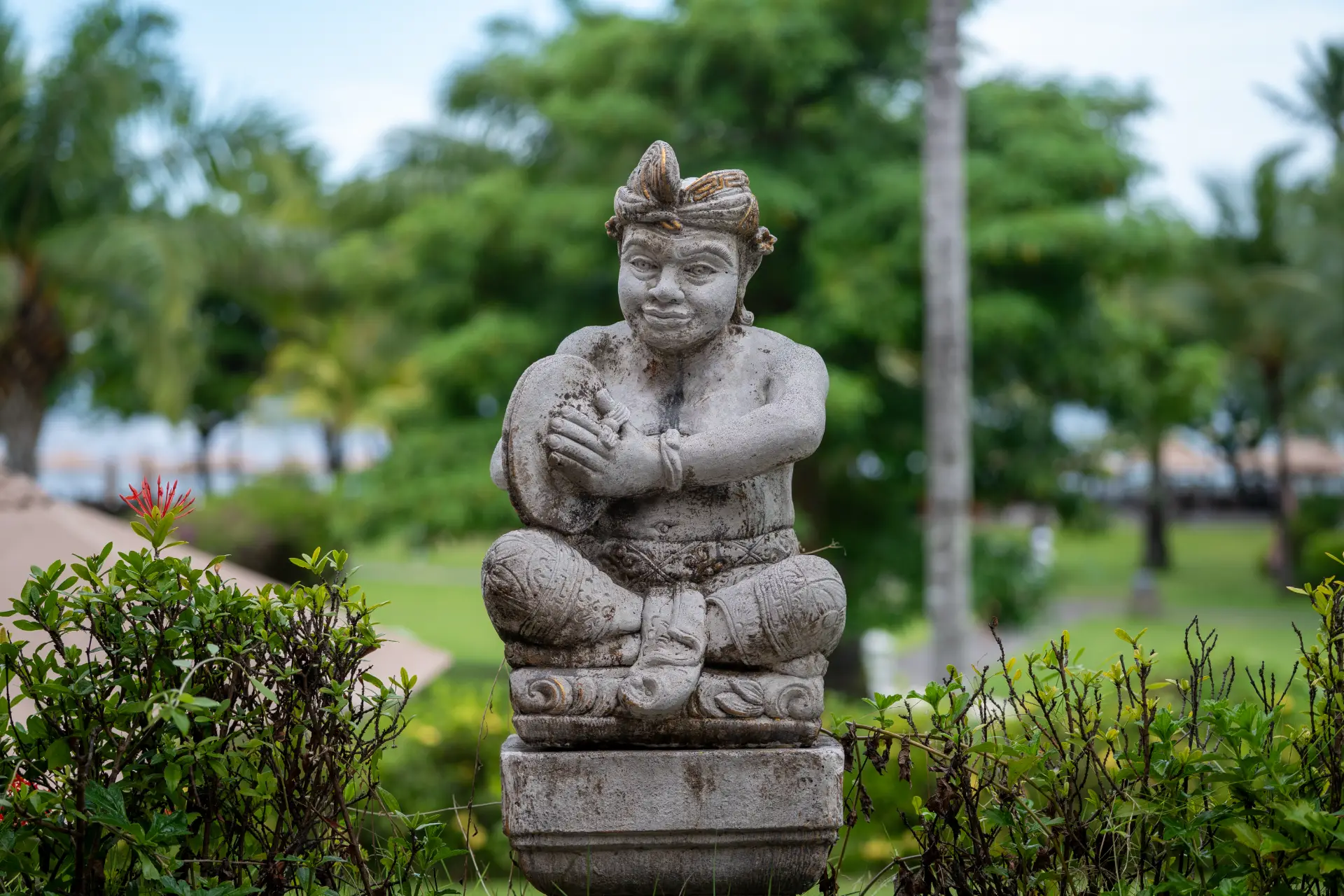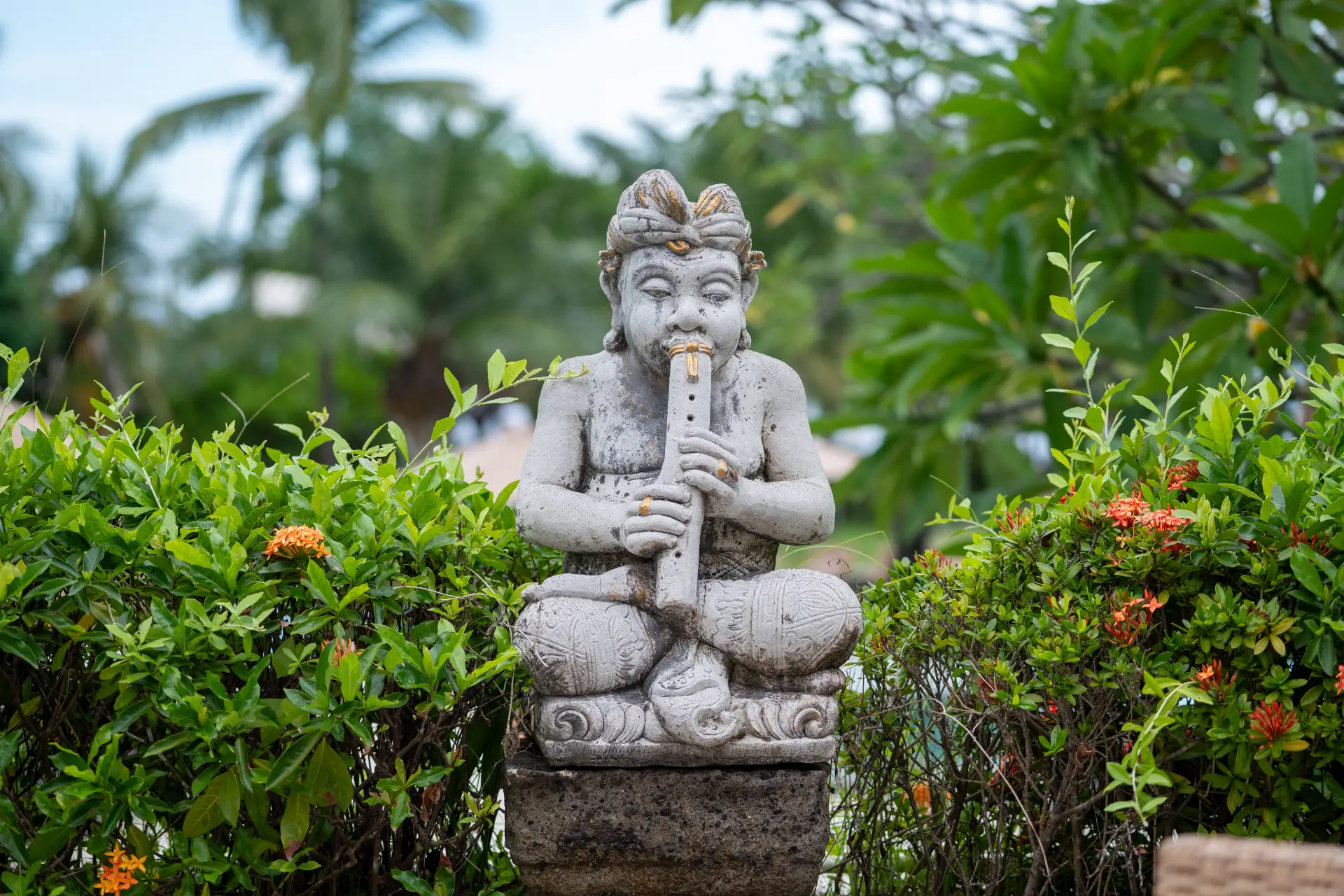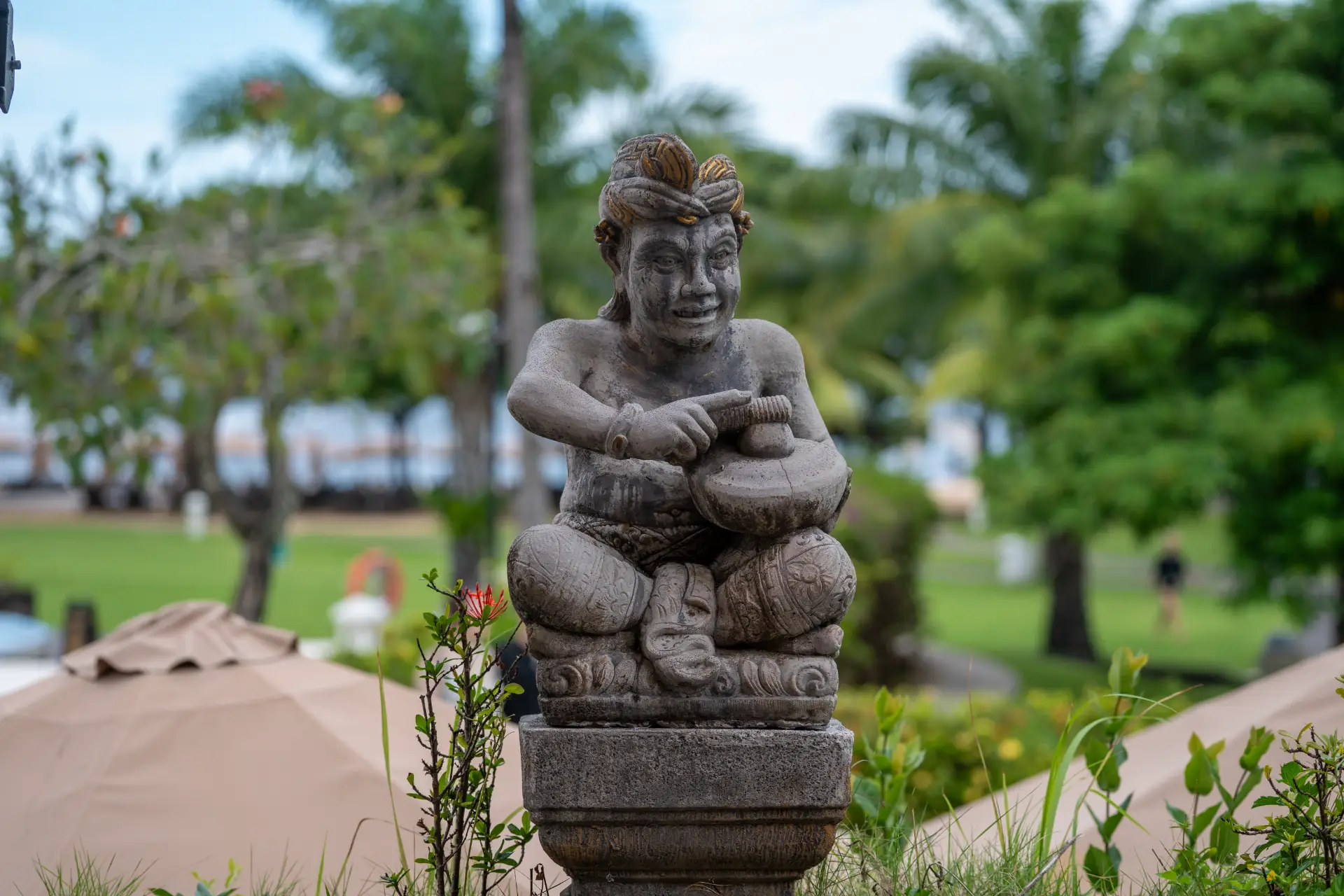
A Balinese human-form sculpture depicting a figure playing a Balinese gamelan instrument, specifically the gangsa, is one of the characteristics of Balinese sculpture that is commonly found in various places such as homes, offices, village halls, restaurants, villas, hotels, and other locations. Balinese gamelan has a very important function in the life of Balinese society. The functions of Balinese gamelan were formulated based on the results of the 1971 Seminar on Sacred and Secular Arts in dance, which grouped these functions into wali, bebali, and balih-balihan arts. As a branch of art that contains elements of beauty such as unity, complexity, simplicity, and others, gamelan functions to evoke a sense of beauty in a person. The series of melodies, rhythms, and harmonies not only provide a deep understanding of the meaning of a piece of music, but also its aesthetic elements can stimulate emotions and bring satisfaction to the human soul.
Listeners as well as performers of gamelan can experience a sense of beauty and spiritual satisfaction through gamelan compositions (Bandem, 2013). Sculptures of this type are not treated as objects with sacred value, but rather as aesthetic elements that enhance the beauty of the space in which they are placed. The gangsa gamelan is one of the traditional musical instruments of Bali. There are several types of gamelan, such as gong gede, gong kebyar, saron, selonding, bale ganjur, angklung, semarapegulingan, gender, gambang, rindik/grantang, congklik, and several other classical or ancient types. All of these gamelan forms are still preserved and performed by the Balinese community. Gamelan is also one of the essential components in Balinese Hindu ritual practices.
The blades of gamelan instruments also vary in form; some have 5, 7, 10, 12, 14, and even 15 keys (bilah). The tone system of gamelan sound consists of two scales: pelog and selendro. The sounds produced when these gamelan blades are struck (deng, dung, dang, ding, ndong) also represent the cardinal directions (west, north, east, south, center) as well as the manifestation of the deities (Dewata Nawa Sanga: Mahadewa, Vishnu, Iswara, Brahma, Shiva), who are believed to protect the island of Bali from all directions. By playing gamelan in every ritual ceremony in Balinese Hindu society, it is also understood as inviting the presence of the deities to witness and provide protection for their devotees. Among various types of Balinese gamelan instruments, some are considered sacred and are only played on certain days and by certain people. This is one of the unique characteristics of Balinese musical instruments; beyond their beautiful sound, they also carry deep meanings.